Showing posts with label Eastern Skunk Cabbage. Show all posts

Wednesday, August 25, 2010

Swamp Lotus: Skunk Cabbage and the Underworld Journey

NOTE: This is a work in progress. I plan to report more fully later this fall when I've had a chance to explore the entheogenic aspects of Skunk Cabbage medicine more fully.

Also please note that fresh roots, flowers, and leaves of Eastern Skunk Cabbage should never be consumed as they contain oxalate crystals. Drying, heating, or tincturing is necessary to render the medicine safe.


A purple flower blossoms in the still-frozen swamps of New England in March.

Beneath the surface, tentacle-like roots draw down energy from the spathe at the flower’s center, melting the earth around them.If the water dries up, the roots will slowly expand and contract, moving the plant to a new location. Through this mechanism, some Eastern Skunk Cabbages (Symplocarpus foetidus) are able to survive to be 1,000 years old though swamps expand and recede around them.

Since I began working with Skunk Cabbage, I’ve understood the plant as a gatekeeper between worlds -- earth and water, above and below, conscious and unconscious, waking and dreaming.

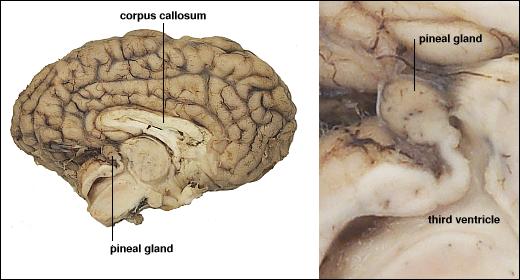
Herbal traditions of many cultures teach that a purple flower is one sign of a plant that will shift consciousness. And the shape of the flower of the Eastern Skunk Cabbage is uncannily similar to the shape of the pineal gland, which produces the Melatonin that helps to regulate or cycles of sleep and dreaming and possibly the DMT that is implicated in the ecstatic experiences connected with childbirth, orgasm, and death.

Skunk Cabbage is also the first food eaten by black bears when they emerge from “hibernation.” Across many cultures, bears are associated with medicinal knowledge, and especially the knowledge of roots, in part because people in many places learned about root medicines by watching which plants the bears would dig. The bears’ descent underground in winter also connects them with dreams and the watery darkness of the underworld and the womb where all things sleep awaiting their birth.

Chemically, Eastern Skunk Cabbage contains 5-hydroxy-tryptamine, an analogue to one of our own neurotransmitters (Serotonin.)

At low doses, the tincture of the root induces a deep sense of stillness and calm, like the waters of a vernal pool. William Cook described it as a simple and reliable nervine, of the most innocent and effective soothing character."

At higher doses, the tincture begins to have an entheogenic effect. The world becomes more fluid. Distinctions between thought and emotion dissolve.

Tryptamines work to reorder the ways in which we process the information we get from the world. As entheogens, both Eastern Skunk Cabbage and Western Skunk Cabbage (Lysichiton americanus) seem to work with the integration of the rational consciousness of the brain and the emotional and transpersonal consciousness of the heart. (Its not clear whether L. americanus contains tryptamines. But Stephen Harrod Buhner first observed this phenomenon with a snuff made from L. americanus roots, and I’ve observed similar effects with the tincture.)

Eastern Skunk Cabbage has a strong affinity with the lungs (contemporary and traditional use as a stimulating expectorant), the heart (traditional Menominee use for “weak heart”), and the waters that flow through our bodies (affinity for the kidneys and uterus.)

Thus, at commonly used medicinal doses, Eastern Skunk Cabbage will help to clear the physical manifestations of grief that gets buried in the lungs.

At entheogenic doses, it begins to address such grief at a soul level through reconnection to the dreaming mind of the Earth.

In both cases, the healing work is not to be undertaken lightly -- the pain released needs a container, and the journey back to the self is a journey through a world fraught with its own perils and challenges. Ecstatic methods require focus to avoid becoming purely chaotic and unleashing unintended consequences.

The journey begins with confronting our fear of seeing ourselves in the mirrors of the dark waters of the world from which the Skunk Cabbage emerges.There is a mythic resonance here with the story of the Fisher King. The Fisher King sits on a throne by the water's edge, blood pouring from a gaping wound in his thigh. And because the king is wounded the land has become barren. The wound never heals because everyone is afraid to ask the one question that would stop the bleeding and restore the king and the land to health -- “What is the source of the wound?” The answer to the question lies beneath the waters the king is afraid to dive into.

Skunk Cabbage can be a vehicle for traveling beneath the surface of the waters of consciousness, to encounter the source of the wound, and move through it and past it, undoing its power to shape consciousness and define identity. The perils lie in the potential to become so immersed in the pain and grief that the journey is never completed. But when the journey is completed, the wound is transformed from a source of pain to an opening between worlds that initiates the traveler into the compassion that comes from understanding grief and into the wellspring of healing that lies beneath the surface and comes from the heart of the universe and rises from the center of our heart from whence it flows outward, blessing and transforming all worlds.

The Jungian analyst, Robert Johnson writes that “fisher king wound is the preparation for consciousness (our modern word for shaman power) and the suffering is the training for the future healer or genius."

The mirror image of the Fisher King is the tarot’s King of Cups who has dived into the waters of the unconscious, come to terms with the darkness, and emerged transformed -- he sits on his throne holding a cup that overflows with healing water. As the bearer of the chalice he is a servant of the Great Goddess, the cup a symbol of her womb and the sacred blood of its mysteriesHaving healed his own wounds, the King of Cups has access to the power to bring the world around him back to life.For the heart that is prepared.

Skunk Cabbage can offer an opening to the realms where such transformation is possible.

(Photo by Darcey Blue)

Saturday, July 17, 2010

Stuck in the mud with snow on the ground : Digging Skunk Cabbage roots

This post is part of the "Adventures in Herbalism" Blog Party hosted by Darcey Blue French at http://www.gaiasgifts.blogspot.com/

Sometimes the things that make a plant so amazing also make it extremely hard to gather.

So it is with Eastern Skunk Cabbage (Symplocarpus foetidus).

Autumn would theoretically be the best time to harvest roots in a swamp in New England. The trouble is that by that time, the leaves of the Skunk Cabbage have died back. So why not just mark the location of the plant earlier in the season and then come back to it?

Skunk Cabbage has contractile roots -- and those roots allow the plants to move slowly across the swamp.

So if you want to dig the roots at the point when the plant's energy is concentrated underground, you have to do it in spring.

The trouble is that what a Skunk Cabbage calls spring in New England is quite different from what we call spring.

You see, Skunk Cabbage in a thermogenic plant. It generates heat to melt the ground around it.

So the flower of the Skunk Cabbage begins to appear when the ground is still frozen and there is often still snow on the ground.

And the time to harvest the roots is when the bud of the flower is still green -- before it opens and turns purple.

So that means slogging out over thin ice into a still frozen swamp.

When you find a bud peaking up through the frozen muck, its time to begin digging it up.

As you dig, the chilly water the plant melted begins to flood the hole and try to suck the plant back down.

And with a shovel its hard to really find how far the root goes down.

So once you have broken the ground, you really need to reach down and start digging with your hands, grasping the plant at its base with one hand, and beginning to extract the long tendrils from the mud.

Some of the plants can be hundreds of years old. And even a fifty year old plant has pretty big roots. And on the surface the one year old plant and the 300 year old plant look just the same. The only way to choose which one to harvest is to ask the plants. And sometimes its the old Grandfathers that will most want to provide their medicine.

So you soon find yourself stooped over in the swamp, almost elbow deep in the muck.

In order to be able to feel the roots you don't want anything thicker than a pair of rubber kitchen gloves. And they don't offer much insulation. And they only reach to your wrists. So you get cold fast. And after a while the tannins in the swamp mud begin working on your skin too -- along with the oxalate crystals of the Skunk Cabbage itself.

And when you are done digging that one plant and are ready to get up and move on to the next, the swamp sucks at your feet. Last March I lost the sole of one of my shoes after digging the roots of one Grandfather and finished the day's harvest with my foot wrapped in a garbage bag.

So I guess it says something about the kind of herbalist that I am that I look forward to the Skunk Cabbage harvest all year long.

Because part of the medicine comes in the harvest.

Harvesting any root is an act of connecting with the Underworld.

Harvesting Skunk Cabbage is almost an Underworld initiation in its own right.

It forces you outside your comfort zone, bringing you bodily into the world beneath the surface of the swamp that you would normally never see.

And you come back with a medicine that helps to dredge up the things that keep you from being fully present in this world -- be it phlegm deep in the lungs, deep depression, or fluid built up anywhere in the body where it doesn't belong. And it calms the tremors and convulsions of that birth -- be it coughing, epilepsy, or uterine spasms.

You can't be born again without going through a dark, wet tunnel.

Harvesting Skunk Cabbage can bring you to the entrance of one passage that will carry you through.

NOTE: Since writing this, I've heard from an herbalist whose family has been harvesting Eastern Skunk Cabbage roots in summer for several generations. Apparently drying the roots in an oven will eliminate enough Calcium Oxalate crystals to make the roots safe to use in a decoction.

Never the less, I do still think early Spring is the best time to harvest the roots -- the plant's energy remains concentrated in the roots at that early point before flowering.

Wendy Snow Fogg tells me that William LeSassier taught his students to harvest the roots in early spring by putting a knife into the center of the spathe.

Monday, March 1, 2010

Skunk Cabbage: New England Bear Medicine

This post is part of the March Blog party hosted by Karen Vaughan at http://www.acupuncturebrooklyn.com/

Thanks to Shannon Donahue of the Great Bear Foundation and to Georgia Stillwell for information used in this post.

__________________________________________________________________

Black bears dream all winter, listening to the songs the plants sing underground while waiting to emerge back into the world.

Skunk Cabbage (Symplocarpus foetidus/Dracontium foetidus) is the first of plant to poke its head through the ground in the swamps of New England, budding just before the first bears come out of their dens. It melts the ice and snow around it by generating heat through a chemical process remarkably similar to that used by hibernating animals to raise their temperature as they rouse from sleep.

Depending on how many acorns are left on the ground, Skunk Cabbage will make up from 50% - over 99% of a black bear's diet in this part of the world.

To the extent that Skunk Cabbage is known today as a medicinal plant, it is known for the effectiveness of the tincture or decoction in treating respiratory conditions including asthma, tuberculosis, and whooping cough. But the plant's association with bears provides a useful framework for rediscovering other aspects of its medicine.

The Micmac use of a decoction of the root to treat diabetes (sometimes in combination with Lady's Slipper) suggesting that the plant may have some impact on regulating blood sugar or general metabolism. The Haudenosaunee ("Iroquois") peoples used the plant to rid children of parasitic worms. And Skunk Cabbage is somewhat diuretic. These actions may suggest some of the roles Skunk Cabbage plays in the bears' spring diet

In more southern climes, black bears eat a lot of Willow catkins. Like Willow, Skunk Cabbage contains high levels of salicylates, which partially account for its analgesic (pain relieving) and diaphoretic (reducing fever by dissipating body heat) qualities. According to Daniel Moreman, many peoples use a poultice of crushed Skunk Cabbage leaves topically to treat pain -- a use I dreamed about long before I read this. The fact that Skunk Cabbage is also powerfully anti-spasmodic may make it a superior topical remedy to other salicylate bearing plants for throbbing muscle pain -- I've used the root tincture internally for this indication, but massaging the tincture directly into the affected area may be effective as well . Some women report excellent relief from menstrual cramps from taking 5-10 drops of the tincture at 15 minute intervals.

(A note of caution before we proceed -- Skunk Cabbage contains high levels of calcium oxalate crystals throughout the plant, making the raw plant potentially deadly in high enough doses. Heat and drying will break them down. NEVER use Skunk Cabbage roots that have not been dried. After drying, tincturing will slow the deterioriation of the relevant medicinal compounds. Untinctured dry Skunk Cabbage root is only good for about a year.)

Like many root medicines associated with bears (Angelica, Osha, Spikenard, etc.), Skunk Cabbage promotes a dropping down into the openness and receptivity that mark the parasympathetic nervous state. Our cultural conditioning makes us think of the parasympathetic state as lethargic and the sympathetic state as alert. But in reality the sympathetic state is marked by a narrowly focused awareness best suited to evading a single immediate physical threat, while the parasympathetic state is associated with broader sensory awareness to everything in one's surroundings.

Many Native peoples in Eastern North America use Skunk Cabbage as a medicine for "calming the nerves." William Cook wrote in 1869 that the plant had a reputation as a narcotic, but that he viewed it more as a nervine "of the most innocent and effective soothing character" --a description that very much matches my own experience. Its combined nervine and anti-spasmodic qualities likely account for its historic use in the treatment of epilepsy (first by the Haudenosaunee and later by the Eclectics.)

Stephen Buhner reports that the powdered root of the plant's western cousin, Lysichiton americanus, also known as Skunk Cabbage, taken as a snuff, immediately initiates the user into the warm and deeply open state that he associates with the centering of consciousness in the heart. Interestingly, our eastern Skunk Cabbage is used by the Menominee to treat "weak heart" and by the Passamaquoddy to treat various heart conditions. I plan an experiment this spring to see if our Skunk Cabbage has the same quality Buhner has discovered in the western species.

Another quality that Skunk Cabbage shares with other bear medicines like Osha and Angelica is an affinity for the female reproductive system. The flower is shaped like the uterus. Mooreman reports that the
Haudenosaunee use "a compound decoction of upper parts and seeds for 'falling of the womb'" (uterine prolapse?) and a decoction of the stalks as a douche for "displacement of the womb." He also makes the mysterious and intriguing note that the Haudenosaunee "pass [the] seed over the genitals to bring about childbirth." This is an uncanny confirmation of information I've received directly from the plant about uses in inducing both abortion and childbirth that it is not ready to reveal in greater detail until I have worked with Skunk Cabbage for many years.

Skunk Cabbage seems to want to re-emerge as a medicine for our culture and our times much like a bear emerging from its den in spring. Tomorrow I go to dig the first Skunk Cabbage roots of the year. We'll see what lessons this season's harvest brings.

NOTE: Since writing this, I've heard from an herbalist whose family has been harvesting Eastern Skunk Cabbage roots in summer for several generations. Apparently drying the roots in an oven will eliminate enough Calcium Oxalate crystals to make the roots safe to use in a decoction.

Never the less, I do still think early Spring is the best time to harvest the roots -- the plant's energy remains concentrated in the roots at that early point before flowering.

Wendy Snow Fogg tells me that William LeSassier taught his students to harvest the roots in early spring by putting a knife into the center of the spathe.

Tuesday, September 29, 2009

A Swampy Medicine for Swampy Lungs

This post is part of the October Blog Party: Bio-regional herbs for the Cold and Flu Season being hosted by Rosalee de la Foret at www.methowvalleyherbs.blogspot.com

Photo by Darcey Blue French


My relationship with Eastern Skunk Cabbage began with a dream about digging its roots to treat my own asthma -- a journey chronicled in an earlier post.

Recently I have been finding that many of my own experiences with the plant are consistent with the discoveries and practices of the Eclectics who knew the plant as Dracontium foetidum. (By the 1890's, most botanists were using the name by which the plant is known today, Symplocarpus foetidus, but I much prefer the older name.)

I believe Eastern Skunk Cabbage deserves a place in the Materia Medica of modern New England herbalists as an excellent ally in treating asthma and respiratory infections -- including the stubborn, lingering respiratory infections that often follow when someone does not get enough rest to fully recover from a serious bout of the flu. We have a tremendous amount to learn from earlier generations' usage of the plant.

The 1898 edition of King's American Dispensatory describes Skunk Cabbage root as "a stimulant, exerting expectorant [. . .]" Just as the plant's contractile roots reach deep into swampy soils to drink up moisture, the root as a medicine brings up excess mucous from deep in the lungs. Energetically it is neutral to warm -- well suited to treating the kind of deep, cold congestion that can set in with a stubborn lingering case of bronchitis or pneumonia.

Yet as a diaphoretic herb it can also help to release the excess heat associated with influenza and the ensuing inflammation of the lungs.

The Eclectics frequently combined Skunk Cabbage with Lobelia in their formulae. Lobelia would help to open the airways while Skunk Cabbage would help to bring up phlegm.

Both medicines are profoundly antispasmodic, and Skunk Cabbage is slightly narcotic, so the combination would also help to quell violent coughing fits and allow a sick person to sleep.

Skunk Cabbage root is also a nervine. King's American Dispensatory notes that "Its action upon the nervous system is marked, relieving irritation, and it has a tendency to promote normal functional activity of the nervous structures." As an asthmatic I know that the shortness of breath caused by the contraction of my airways is always compounded by the wave of panic that ensues when I can't get enough oxygen. Skunk Cabbage helps tremendously in calming that panic.

I harvest the roots Eastern Skunk Cabbage in March, when the green buds of the flowers have emerged but have not yet turned purple. There is usually still snow on the ground -- Skunk Cabbage is thermogenic and melts the ice, frost, and snow around it to become the first plant emerging in the swamp in spring. I dry the roots for a few days as a precaution because drying diminishes the levels of calcium oxalate crystals present, and then tincture them in 100 proof vodka. For acute respiratory infections I use 5-15 drops 4-6 times a day.

For bronchitis and bacterial and fungal pneumonias I usually use Skunk Cabbage along with Usnea.

For persistent, deep, cold, wet bronchitis and pneumonia I use Skunk Cabbage along with Elecampane and Pleurisy Root.

Large doses of Skunk Cabbage root may be emetic -- and in one nineteenth century formula, Skunk Cabbage was combined with Lobelia, Wild Ginger, Pleurisy Root, and Bloodroot as an "emetic for children and infants, [. . . ] safely used in croup, whooping-cough, bronchitis, asthma, convulsions, and in all cases where an emetic is required." When my asthma was at its most severe growing up, I often felt relief only when I would throw up, forcing some of the mucous from my bronchi in the process. In my own practice, I am not quite ready to revive old emetic therapies for acute bronchial and pulmonary congestion, but the idea is worth thinking about.

Sunday, March 22, 2009

Skunk Cabbage Dreams -- a work in progress

(U.S. Forest Service photo)

It began last April with a dream. In my waking life, my lungs had been congested and my neck and shoulder were sore. Before bed, I sat at my altar and burned sage and asked for a plant ally to reveal itself to me while I slept.

In the dream, Jason sat across from me in the grass on my parent's front lawn, and as we talked he told me he was having trouble breathing too. He remembered a great aunt, a Narraganset woman, who had used Skunk Cabbage as medicine.

We began drumming and singing and walked into the swamp behind the house. We came on a giant, glowing skunk cabbage plant who told us to dig up his roots and make a tincture to help our lungs and to take his leaves and make a poultice of his leaves to relieve muscle pain.

A friend confirmed that Skunk Cabbage was a medicine that could be used in those ways, but told me that by April the plant was too full of calcium oxylate for the roots to be used safely. So it would be almost a full year before the plant would begin teaching me directly . . . .

______________________________


Skunk Cabbage is not a plant for the faint of heart. The leaves and flowers smell like a skunk when bruised -- perfume for those who like their pheremones strong, unbearable odor to those who prefer subtle scents. The roots need to be harvested in early spring, best dug when the flowers are still green and have yet to bloom.

A trickster, Skunk Cabbage lures you out into the swamp, ankle deep in barely melted water in places where the mud has thawed just enough to suck your feet down. The roots are notoriously hard to harvest A U.S. Forest Service website says:

Skunk Cabbage is a perennial herb that has contractile roots that contract growing down into the soil. These roots pull the stems of Skunk Cabbage deeper into the wet mucky substrates found in wet forests, swamps and along streams. Eventually the entire stem is below surface level. After several years of being pulled further into the soil it is nearly impossible to dig up.

But Symplocarpus foetidus also has a way of setting roots deep in the imagination. So when winter began to subside I let it be known that I was determined to harvest Skunk Cabbage roots this year.

My mother called me in mid-March to tell me that she had seen the first Skunk Cabbage coming up in the swamp I had visited in my dream. By the time I got there, a few days later, the flowers of the plants she had found at the edge of the woods were purple and blooming. Thinking that I had come too late, I thought about going home, but I decided to offer some tobacco to the flower and offer prayers in hopes that maybe skunk cabbage would reveal his secrets next year.

The first surprise came when I realized that the plant that had seemed so masculine in my dream was speaking to my heart in a feminine voice. She told me to go deeper into the swamp. So I walked out as far as I could, following a trail of strange purple flowers.

I came to the edge of a shallow pool, and looked up and saw two deer standing directly across the water. We watched each other for 10 minutes, and when they slowly began to walk away I followed them until I stumbled on a green skunk cabbage flower sprouting up out of the water. Wading in up to my ankles, I dug very carefully around the plant, and then reached down into the mud, cradling the plant in my hands, and pulling up slowly. To my surprise, the plant yielded itself to me. I shook loose the dirt, put it in my bag, and followed a stream flowing from the pool to find three more young plants willing to give themselves for medicine.

____________________________________________________________

The Skunk Cabbage rhizome is thick and woody. The roots are tough and snakelike, pulling themselves deep into the mud. They are also powerfully thermogenic, thawing the ground around them.

Their medicine works in a similar way. The form of the roots suggests the bronchii (and the form of the round spiky green fruit suggets the alveolii -- though the fruit itself is not used medicinally). The medicine works its way deep into the lungs, bringing up mucous. The anti-spasmodic action of the plant's medicine simultaneously eases the violence of the coughing generated by the plant's expectorant properties. It works best in combination with other herbs -- elecampane suggests herself to me as a plant whose medicine complements Skunk Cabbage nicely.

As a diaphoretic, Skunk Cabbage helps to open the pores, relieving the heat of early fever -- just as heat rises outward from the plants' roots into the soil.

The shape of the flower suggests an inverted uterus hinting at the use of the roots in childbirth -- used to ease contractions. Interestingly, the Makah of the Pacific Northwest chewed on the roots of the distantly related Western Skunk Cabbage (Lysichiton americanus) to induce abortion early in a pregnancy, and the Quileute used the juice of the pounded and boiled root to ease labor. (Erna Gunther and Jeanne R. Janish. Ethnobotany of Washington. University of Washington Press, 1973,) My intuition tells me that Symplocarpus foetidus may also have abortifacient properties in early pregnancy, but that those secrets are likely to reveal themselves to an herbalist only after many years of working with the plant.

_________________________________

Skunk cabbage has strange and powerful medicine on a magical level as well.

The plant's energies alternate between being intensely masculine and intensely feminine -- and sometimes the plant seems to hold both energies at once. With fire rising from its body, roots deep in earth and water, and flowers and leaves giving off their musky scent, Skunk Cabbage combines the four elements of western magical traditions.

With its paradoxical nature and its dwelling place at a boundary between worlds, Skunk Cabbage as a natural ally for shamans and midwives.

The flower whispers strange names to me -- "The Faerie Shoe" that allows one bestowed with the plant's blessing to join in the dancing of the Sidhe without wearing through the soles of the dancer's feet. "Mystery Flower" -- dark and smooth inside, reaching down into moist, fertile darkness -- allowing us to hold a connection to the place from which life emerged while remaining present to the world into which it was born.

Its shape also suggests the form of the pineal gland, frequently associated with the third eye. The pineal gland produces melatonin which, among other things, helps us to dream. There is a resonance here with the slight narcotic quality of the medicine of the root. Dr. Rick Strassman has theorized that at birth, at death, and at moments of extreme pleasure or pain the pineal glands also produces dimethyltryptamine (DMT), a powerful psychedellic/entheogenic compound also present in many plants (most famously in the ayahuasca vine) that seems to facilitate the spirit's journey into and out of the body. If the shape of the Skunk Cabbage flower is in fact a signature revealing the plant's affinity for the pineal gland this suggests that at a magical level, and perhaps as a flower essence, Skunk Cabbage may help to ease the transition of shamanic practitioners as they move back and forth between worlds.

The contractile roots pull skunk cabbage deeper and deeper into my consciousness -- their heat burning new pathways for mind and spirit to explore.