Pandemics don't happen just because pathogens mutate. Pathogens are mutating all the time -- a process accelerated in our own time by the indiscriminate use of antibacterial and antiviral medications, increased presence of synthetic chemicals and ionizing radiation in our environment, and the creation of environments that produce the perfect crucible for viral and bacterial mutation (ie. cesspools at industrial farms filled with the feces of livestock who have been fed massive doses of antibiotics throughout their lives.)
If our bodies got sick everytime they were exposed to new bacteria and viruses, we would never be well. The truth is that we are not discrete organisms whose bodies malfunction when they are infiltrated by microscopic creatures. Our bodies are more akin to ecosystem made up of many kinds of cells many kinds of cells, some of which can't survive on their own and some of which function independently but symbioticly. We maintain health by maintaining that ecological balance.
But that balance itself is disrupted by physical and emotional stresses. The body responds to all stresses as though they were threats to its survival, gearing up for a "fight or flight" response -- and preparing its immune system to respond to the need to prevent possible wounds from becoming infected. When the body is kicked into that kind of response over and over again, the immune system becomes burned out and depleted. That increases the chances that bacteria or viruses will begin go reproduce out of control in the most vulnerable parts of the body.
This is why pandemics tend to strike in times of collective trauma -- trauma leaves people in a vulnerable state. The flu of 1918 took its greatest toll on a generation that had either fought in World War I or watched sisters and brothers and lovers come home injured, "shell-shocked," or dead. The current flu emerged in a country plagued by extreme poverty, violent repression, and the disintegration of families and communities due to mass migration and spread from there into a country plagued by layoffs, foreclosure, and economic collapse. Its no mistake that one of the first Mexican states to report deaths from this flu was Oaxaca, a state where the government brutally put down a popular uprising two years ago.
Collective panic about a pandemic contributes to the existing stresses people are under, increasing the likelihood of its spread. As herbalists, the best thing we can do is help to put people's fears in realistic perspective and then help them to take control of their own health by taking sensible preventive measures like washing with vinegar, feeding their immune systems with healthy foods, and working with herbs that will support the immune system without stimulating it like astragalus and usnea and herbs that help to regulate stress responses and immune responses like ashwagandha and eleuthero while avoiding herbs like echinacea that can overstimulate the immune system.
We can also share the knowledge that if the epidemic does spread, the plants that will cure the disease will become more abundant and more apparent as well. Much as we try to seperate ourselves, we are part of the ecosystems around us, and what we exhale and excrete prompts plants to produce chemicals to balance out our chemistries -- there is a natural feedback loop that allows the system to maintain homeostasis. "Invasive" species like purple loosestrife and Japanese knotweed show great promise in providing medicine for viral pandemics as do the sumac the sumac that grows in places where fields are slowly beginning the long process of becoming forests again and the sweetfern that grows in disrupted areas. [Thanks to Tommy Priester and Madelon Hope for much of this information.]
We are children of a generous universe, living on a planet generous enough to offer us medicine to heal the diseases that result from the violence we do to Her and to each other if we will open our hearts to the information Her plant children offer us. The way out of the pandemic is to create balance in our bodies, our communities, our ecosystems, and our planet.
Saturday, May 2, 2009

Friday, April 17, 2009
Of Rumi, Heartbreak, and Elecampane
 Rumi wrote:
Heartbreak pulls up the roots of old happinessesSuch is the work of Elecampane -- a plant which was used widely in Persian medicine. Maude Grieve wrote in A Modern Herbal that Elecampane "grows well in moist, shady positions." Not surprisingly, Elecampane's roots are excellent medicine for deep, cold, moist, congestive lung conditions -- helping to break up the congestion and draw it up and out as well as soothing damaged lung tissue.
So a new ecstasy can stroll in from Beyond.
Heartbreak pulls up all withered, crooked roots
So no root can stay hidden.
Heartbreak may pull many things from the heart
But in return it will lavish kingdoms.
(translated by Andrew Harvey)
The Malecite's use of Elecampane to cure heartache (cited by Gail Faith Edwards in Opening Our Wild Hearts to the Healing Herbs) points us to the fact that Elecampane can work in the same way on old grief stored deeply in the chest.
Elecampane's roots reach deep to pull grief up and out.
But the plant herself reaches from the cold, wet soil up straight and very tall to blossom in wildhaired yellow glory -- reminding us that the cold, wet grief within us can also be transmuted into something radiantly beautiful.
Rumi writes too that
Until a mother feels the pain of childbirth,Deep enough grief breaks us open, allowing who we are at the core to begin to emerge. Every initiation begins in the breakdown of the old in order to allow the new to be born.
The child can find no way to be born.
And Elecampane's flower essence is a medicine of this last stage of initiation, helping us claim newfound strength and power and wisdom as our own and bring it out into the world.
And so she brings us out of heartbreak and into the lavish kingdoms we create when we remember our repsonsibility to claim our sovereignty and flower fully.
Sunday, March 22, 2009
Skunk Cabbage Dreams -- a work in progress
 (U.S. Forest Service photo)
It began last April with a dream. In my waking life, my lungs had been congested and my neck and shoulder were sore. Before bed, I sat at my altar and burned sage and asked for a plant ally to reveal itself to me while I slept.
In the dream, Jason sat across from me in the grass on my parent's front lawn, and as we talked he told me he was having trouble breathing too. He remembered a great aunt, a Narraganset woman, who had used Skunk Cabbage as medicine.
We began drumming and singing and walked into the swamp behind the house. We came on a giant, glowing skunk cabbage plant who told us to dig up his roots and make a tincture to help our lungs and to take his leaves and make a poultice of his leaves to relieve muscle pain.
A friend confirmed that Skunk Cabbage was a medicine that could be used in those ways, but told me that by April the plant was too full of calcium oxylate for the roots to be used safely. So it would be almost a full year before the plant would begin teaching me directly . . . .
______________________________
Skunk Cabbage is not a plant for the faint of heart. The leaves and flowers smell like a skunk when bruised -- perfume for those who like their pheremones strong, unbearable odor to those who prefer subtle scents. The roots need to be harvested in early spring, best dug when the flowers are still green and have yet to bloom.
A trickster, Skunk Cabbage lures you out into the swamp, ankle deep in barely melted water in places where the mud has thawed just enough to suck your feet down. The roots are notoriously hard to harvest A U.S. Forest Service website says:
But Symplocarpus foetidus also has a way of setting roots deep in the imagination. So when winter began to subside I let it be known that I was determined to harvest Skunk Cabbage roots this year.
My mother called me in mid-March to tell me that she had seen the first Skunk Cabbage coming up in the swamp I had visited in my dream. By the time I got there, a few days later, the flowers of the plants she had found at the edge of the woods were purple and blooming. Thinking that I had come too late, I thought about going home, but I decided to offer some tobacco to the flower and offer prayers in hopes that maybe skunk cabbage would reveal his secrets next year.
The first surprise came when I realized that the plant that had seemed so masculine in my dream was speaking to my heart in a feminine voice. She told me to go deeper into the swamp. So I walked out as far as I could, following a trail of strange purple flowers.
I came to the edge of a shallow pool, and looked up and saw two deer standing directly across the water. We watched each other for 10 minutes, and when they slowly began to walk away I followed them until I stumbled on a green skunk cabbage flower sprouting up out of the water. Wading in up to my ankles, I dug very carefully around the plant, and then reached down into the mud, cradling the plant in my hands, and pulling up slowly. To my surprise, the plant yielded itself to me. I shook loose the dirt, put it in my bag, and followed a stream flowing from the pool to find three more young plants willing to give themselves for medicine.
A trickster, Skunk Cabbage lures you out into the swamp, ankle deep in barely melted water in places where the mud has thawed just enough to suck your feet down. The roots are notoriously hard to harvest A U.S. Forest Service website says:
Skunk Cabbage is a perennial herb that has contractile roots that contract growing down into the soil. These roots pull the stems of Skunk Cabbage deeper into the wet mucky substrates found in wet forests, swamps and along streams. Eventually the entire stem is below surface level. After several years of being pulled further into the soil it is nearly impossible to dig up.
But Symplocarpus foetidus also has a way of setting roots deep in the imagination. So when winter began to subside I let it be known that I was determined to harvest Skunk Cabbage roots this year.
My mother called me in mid-March to tell me that she had seen the first Skunk Cabbage coming up in the swamp I had visited in my dream. By the time I got there, a few days later, the flowers of the plants she had found at the edge of the woods were purple and blooming. Thinking that I had come too late, I thought about going home, but I decided to offer some tobacco to the flower and offer prayers in hopes that maybe skunk cabbage would reveal his secrets next year.
The first surprise came when I realized that the plant that had seemed so masculine in my dream was speaking to my heart in a feminine voice. She told me to go deeper into the swamp. So I walked out as far as I could, following a trail of strange purple flowers.
I came to the edge of a shallow pool, and looked up and saw two deer standing directly across the water. We watched each other for 10 minutes, and when they slowly began to walk away I followed them until I stumbled on a green skunk cabbage flower sprouting up out of the water. Wading in up to my ankles, I dug very carefully around the plant, and then reached down into the mud, cradling the plant in my hands, and pulling up slowly. To my surprise, the plant yielded itself to me. I shook loose the dirt, put it in my bag, and followed a stream flowing from the pool to find three more young plants willing to give themselves for medicine.
____________________________________________________________
The Skunk Cabbage rhizome is thick and woody. The roots are tough and snakelike, pulling themselves deep into the mud. They are also powerfully thermogenic, thawing the ground around them.
Their medicine works in a similar way. The form of the roots suggests the bronchii (and the form of the round spiky green fruit suggets the alveolii -- though the fruit itself is not used medicinally). The medicine works its way deep into the lungs, bringing up mucous. The anti-spasmodic action of the plant's medicine simultaneously eases the violence of the coughing generated by the plant's expectorant properties. It works best in combination with other herbs -- elecampane suggests herself to me as a plant whose medicine complements Skunk Cabbage nicely.
As a diaphoretic, Skunk Cabbage helps to open the pores, relieving the heat of early fever -- just as heat rises outward from the plants' roots into the soil.
The shape of the flower suggests an inverted uterus hinting at the use of the roots in childbirth -- used to ease contractions. Interestingly, the Makah of the Pacific Northwest chewed on the roots of the distantly related Western Skunk Cabbage (Lysichiton americanus) to induce abortion early in a pregnancy, and the Quileute used the juice of the pounded and boiled root to ease labor. (Erna Gunther and Jeanne R. Janish. Ethnobotany of Washington. University of Washington Press, 1973,) My intuition tells me that Symplocarpus foetidus may also have abortifacient properties in early pregnancy, but that those secrets are likely to reveal themselves to an herbalist only after many years of working with the plant.
Their medicine works in a similar way. The form of the roots suggests the bronchii (and the form of the round spiky green fruit suggets the alveolii -- though the fruit itself is not used medicinally). The medicine works its way deep into the lungs, bringing up mucous. The anti-spasmodic action of the plant's medicine simultaneously eases the violence of the coughing generated by the plant's expectorant properties. It works best in combination with other herbs -- elecampane suggests herself to me as a plant whose medicine complements Skunk Cabbage nicely.
As a diaphoretic, Skunk Cabbage helps to open the pores, relieving the heat of early fever -- just as heat rises outward from the plants' roots into the soil.
The shape of the flower suggests an inverted uterus hinting at the use of the roots in childbirth -- used to ease contractions. Interestingly, the Makah of the Pacific Northwest chewed on the roots of the distantly related Western Skunk Cabbage (Lysichiton americanus) to induce abortion early in a pregnancy, and the Quileute used the juice of the pounded and boiled root to ease labor. (Erna Gunther and Jeanne R. Janish. Ethnobotany of Washington. University of Washington Press, 1973,) My intuition tells me that Symplocarpus foetidus may also have abortifacient properties in early pregnancy, but that those secrets are likely to reveal themselves to an herbalist only after many years of working with the plant.
_________________________________
Skunk cabbage has strange and powerful medicine on a magical level as well.
The plant's energies alternate between being intensely masculine and intensely feminine -- and sometimes the plant seems to hold both energies at once. With fire rising from its body, roots deep in earth and water, and flowers and leaves giving off their musky scent, Skunk Cabbage combines the four elements of western magical traditions.
With its paradoxical nature and its dwelling place at a boundary between worlds, Skunk Cabbage as a natural ally for shamans and midwives.
The flower whispers strange names to me -- "The Faerie Shoe" that allows one bestowed with the plant's blessing to join in the dancing of the Sidhe without wearing through the soles of the dancer's feet. "Mystery Flower" -- dark and smooth inside, reaching down into moist, fertile darkness -- allowing us to hold a connection to the place from which life emerged while remaining present to the world into which it was born.
Its shape also suggests the form of the pineal gland , frequently associated with the third eye. The pineal gland produces melatonin which, among other things, helps us to dream. There is a resonance here with the slight narcotic quality of the medicine of the root. Dr. Rick Strassman has theorized that at birth, at death, and at moments of extreme pleasure or pain the pineal glands also produces dimethyltryptamine (DMT), a powerful psychedellic/entheogenic compound also present in many plants (most famously in the ayahuasca vine) that seems to facilitate the spirit's journey into and out of the body. If the shape of the Skunk Cabbage flower is in fact a signature revealing the plant's affinity for the pineal gland this suggests that at a magical level, and perhaps as a flower essence, Skunk Cabbage may help to ease the transition of shamanic practitioners as they move back and forth between worlds.
The contractile roots pull skunk cabbage deeper and deeper into my consciousness -- their heat burning new pathways for mind and spirit to explore.
The plant's energies alternate between being intensely masculine and intensely feminine -- and sometimes the plant seems to hold both energies at once. With fire rising from its body, roots deep in earth and water, and flowers and leaves giving off their musky scent, Skunk Cabbage combines the four elements of western magical traditions.
With its paradoxical nature and its dwelling place at a boundary between worlds, Skunk Cabbage as a natural ally for shamans and midwives.
The flower whispers strange names to me -- "The Faerie Shoe" that allows one bestowed with the plant's blessing to join in the dancing of the Sidhe without wearing through the soles of the dancer's feet. "Mystery Flower" -- dark and smooth inside, reaching down into moist, fertile darkness -- allowing us to hold a connection to the place from which life emerged while remaining present to the world into which it was born.
Its shape also suggests the form of the pineal gland
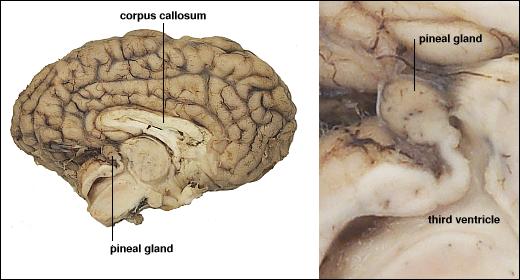 , frequently associated with the third eye. The pineal gland produces melatonin which, among other things, helps us to dream. There is a resonance here with the slight narcotic quality of the medicine of the root. Dr. Rick Strassman has theorized that at birth, at death, and at moments of extreme pleasure or pain the pineal glands also produces dimethyltryptamine (DMT), a powerful psychedellic/entheogenic compound also present in many plants (most famously in the ayahuasca vine) that seems to facilitate the spirit's journey into and out of the body. If the shape of the Skunk Cabbage flower is in fact a signature revealing the plant's affinity for the pineal gland this suggests that at a magical level, and perhaps as a flower essence, Skunk Cabbage may help to ease the transition of shamanic practitioners as they move back and forth between worlds.
The contractile roots pull skunk cabbage deeper and deeper into my consciousness -- their heat burning new pathways for mind and spirit to explore.
Monday, January 19, 2009
Mental reservations
Commenting on the oath of office this morning, a friend wrote that "having' mental
reservations' would actually be a sign of wisdom." I don't claim wisdom, at least
not on behalf of the part of me that speaks in words, but I want to speak my own
mental reservations: I want to believe in Barack Obama. The significance and
power of a nation whose wealth was built through the enslavement of people
kidnapped from Africa electing the son of a Kenyan to be President is not lost
on me. Nor is the reality that the margin of difference between the policies
promised by the new administration and those enacted by the last is a margin that
represents life or death for millions. And who could not be moved by Rev. Joseph
Lowery speaking the benediction that evokes a god older and more loving and
more real than the God of bondage evoked by Rev. Rick Warren?
But there are truths that burn so hot that the veils that once covered them can never
be repaired. And they keep me from celebrating wholeheartedly.
Barack Obama intends to keep 50,000 -- 80,000 troops on the ground in Iraq
indefinitely. And he plans to escalate the war in Afghanistan.
Those wars and the dozen proxy wars our taxes will continue to fund are waged to
ensure the continuation of the mindless growth demanded by the system we live
under -- the growth that Edward Abbey called "the ideology of a cancer cell," the
growth that consumes forests and mountains and deserts and lives and whole
nations and whole species.I don't doubt that President Obama wants to reduce
the damage done, to render the system a little bit less brutal. And again, any
diminishment of brutality means less suffering .
But at the same time, the commitment to continuing that brutality means an
acceptanceof more "collateral damage." President Obama said "we will not
apologize for our wayof life or waver in its defense." But only when we do finally
apologize for the wayin which we have been living at the world's expense
(including apologizing to ourselves for the ways in which we have cut ourselves
off from the living Earth) can we "put aside childish things" and learn to live in a just
and sustainable way .In this country we tend to ignore the fact that systems have a
reality and mind of their own, and that they always operate to ensure their own
survival. In pledging himself to the idea of America, President Obama
surrendered a part of his own will to the systems of control that bind themselves
together under that name.
But a witch bows to no one. And I will not offer my own allegiance to that system.
I offer my love and support to a man named Barack Obama wrestling to hold
onto his humanity in a situation where great powers conspire to rob him of it.
But I have no loyalty to President Barack Obama as he undertakes the work
of attempting to guide and steer violent systems of control. My own allegiances
are to mysel(ves/f), the truth, and the living universe.Those loyalties may brand me
as an outsider -- but such has always been the way of the poet and the shaman .
Like Tomas the Rhymer I will kiss the lips of the Queen of F(a)eri(e) and be
transformed, given the gift of a tongue that will not lie that makes it impossible
to ever again be at home in a world woven from the enchantment of falsehoods
repeated so often that we no longer hear the din or imagine the possibility that the
imagination can stray outside the bounds set by that wall of noise. The tongue
that speaks the truth cuts a hole in that wall, revealing a road that leads into the
sweet, fierce ,loving wildness of the heart. I am setting out along that path.
reservations' would actually be a sign of wisdom." I don't claim wisdom, at least
not on behalf of the part of me that speaks in words, but I want to speak my own
mental reservations: I want to believe in Barack Obama. The significance and
power of a nation whose wealth was built through the enslavement of people
kidnapped from Africa electing the son of a Kenyan to be President is not lost
on me. Nor is the reality that the margin of difference between the policies
promised by the new administration and those enacted by the last is a margin that
represents life or death for millions. And who could not be moved by Rev. Joseph
Lowery speaking the benediction that evokes a god older and more loving and
more real than the God of bondage evoked by Rev. Rick Warren?
But there are truths that burn so hot that the veils that once covered them can never
be repaired. And they keep me from celebrating wholeheartedly.
Barack Obama intends to keep 50,000 -- 80,000 troops on the ground in Iraq
indefinitely. And he plans to escalate the war in Afghanistan.
Those wars and the dozen proxy wars our taxes will continue to fund are waged to
ensure the continuation of the mindless growth demanded by the system we live
under -- the growth that Edward Abbey called "the ideology of a cancer cell," the
growth that consumes forests and mountains and deserts and lives and whole
nations and whole species.I don't doubt that President Obama wants to reduce
the damage done, to render the system a little bit less brutal. And again, any
diminishment of brutality means less suffering .
But at the same time, the commitment to continuing that brutality means an
acceptanceof more "collateral damage." President Obama said "we will not
apologize for our wayof life or waver in its defense." But only when we do finally
apologize for the wayin which we have been living at the world's expense
(including apologizing to ourselves for the ways in which we have cut ourselves
off from the living Earth) can we "put aside childish things" and learn to live in a just
and sustainable way .In this country we tend to ignore the fact that systems have a
reality and mind of their own, and that they always operate to ensure their own
survival. In pledging himself to the idea of America, President Obama
surrendered a part of his own will to the systems of control that bind themselves
together under that name.
But a witch bows to no one. And I will not offer my own allegiance to that system.
I offer my love and support to a man named Barack Obama wrestling to hold
onto his humanity in a situation where great powers conspire to rob him of it.
But I have no loyalty to President Barack Obama as he undertakes the work
of attempting to guide and steer violent systems of control. My own allegiances
are to mysel(ves/f), the truth, and the living universe.Those loyalties may brand me
as an outsider -- but such has always been the way of the poet and the shaman .
Like Tomas the Rhymer I will kiss the lips of the Queen of F(a)eri(e) and be
transformed, given the gift of a tongue that will not lie that makes it impossible
to ever again be at home in a world woven from the enchantment of falsehoods
repeated so often that we no longer hear the din or imagine the possibility that the
imagination can stray outside the bounds set by that wall of noise. The tongue
that speaks the truth cuts a hole in that wall, revealing a road that leads into the
sweet, fierce ,loving wildness of the heart. I am setting out along that path.
Friday, January 2, 2009
Poetic fragments in progress
Maybe its the Scorpio rising
that makes the smell of
sex and death cling to my skin
when I slip between worlds,
reminding you of when
I let my godself rain down
where apples rotted
back into rich dark soil
watering seeds
broken open by the heat
of burning cities
and melting concrete.
Your body never quite sure
what to do with the feeling stirred
when you catch my scent on the wind,
never sure what to do with darkness --
the last time you tasted it
it all ended in blood and fire,
but something in you hungers
for the metalic pungence of that blood
and the searing blue
at the center of the flames.
And the crescent moon
you wore around your neck
was born from blackness
to which it cycles back,
but not before it shines
in silver fullness,
moving the waters in me
and calling down the rain.
that makes the smell of
sex and death cling to my skin
when I slip between worlds,
reminding you of when
I let my godself rain down
where apples rotted
back into rich dark soil
watering seeds
broken open by the heat
of burning cities
and melting concrete.
Your body never quite sure
what to do with the feeling stirred
when you catch my scent on the wind,
never sure what to do with darkness --
the last time you tasted it
it all ended in blood and fire,
but something in you hungers
for the metalic pungence of that blood
and the searing blue
at the center of the flames.
And the crescent moon
you wore around your neck
was born from blackness
to which it cycles back,
but not before it shines
in silver fullness,
moving the waters in me
and calling down the rain.
Thursday, January 1, 2009
This is the year . . .
"If every rebellion begins with the idea
that conquerors on horseback
are not many-legged gods, that they too drown
if plunged in the river,
then this is the year."
-- Martin Espada, Imagine the Angels of Bread
This is the year we were born to live in.
This is the year when we begin to live as who we are, who we always have been at the core, who we were born to be.
The year we have prepared for all our lives.
After so many lifetimes of believing that the path of liberation lay in going up and out of our bodies, up and out of the world, this is the year we finally begin to come fully into our bodies, to know that their skin and bone and muscle and blood and nerve and flesh are the instruments through which our highest aspirations can be realized,
that the pleasures of our senses feed a bright and fierce fire that rises within us
and that this time instead of burning ourselves at the stake we can set that fire loose in the world,
burning away the illusions that have made people believe that there is no alternative to a life based on the brutalizing assumptions of scarcity, danger, and fear,
already we are watching the fire start to burn away the screens onto which those illusions have been projected as markets crash and an empire comes up against the limitations of its power to subdue the rest of the world through the threat or reality of starvation or bombardment.
Yes, the suffering around us is real. And yes, those still caught in fear lash out in terrifying ways as they falsely believe the fire has come to burn them instead of free them.
But at the same time billions are realizing they no longer have to surrender their wills to the disembodied spirit behind the burning curtain.
And the fire melts the pavement and the ash covers our feet and we take root again in the soil and draw up water from the Earth
and rain it back down to feed the seeds that have waited 500 years to be called back to life.
This is the year when we know for certain that those seeds will give rise to flowers and fruit again.
Rejoice!
that conquerors on horseback
are not many-legged gods, that they too drown
if plunged in the river,
then this is the year."
-- Martin Espada, Imagine the Angels of Bread
This is the year we were born to live in.
This is the year when we begin to live as who we are, who we always have been at the core, who we were born to be.
The year we have prepared for all our lives.
After so many lifetimes of believing that the path of liberation lay in going up and out of our bodies, up and out of the world, this is the year we finally begin to come fully into our bodies, to know that their skin and bone and muscle and blood and nerve and flesh are the instruments through which our highest aspirations can be realized,
that the pleasures of our senses feed a bright and fierce fire that rises within us
and that this time instead of burning ourselves at the stake we can set that fire loose in the world,
burning away the illusions that have made people believe that there is no alternative to a life based on the brutalizing assumptions of scarcity, danger, and fear,
already we are watching the fire start to burn away the screens onto which those illusions have been projected as markets crash and an empire comes up against the limitations of its power to subdue the rest of the world through the threat or reality of starvation or bombardment.
Yes, the suffering around us is real. And yes, those still caught in fear lash out in terrifying ways as they falsely believe the fire has come to burn them instead of free them.
But at the same time billions are realizing they no longer have to surrender their wills to the disembodied spirit behind the burning curtain.
And the fire melts the pavement and the ash covers our feet and we take root again in the soil and draw up water from the Earth
and rain it back down to feed the seeds that have waited 500 years to be called back to life.
This is the year when we know for certain that those seeds will give rise to flowers and fruit again.
Rejoice!
Friday, November 7, 2008
Burning the robes
For most of my life, I have feared my own power and my own desires.
I have tried to suppress and deny and cloak them.
At a deep level, I have embraced the archetype of the priest in an attempt to contain them. I have worn that identity for so long that I began to mistake it for a second skin.
I sought an ideal of purity. I sought to lock my own desires away deep inside me, believing that I did not deserve to be loved completely and that there were parts of me that needed to be purified or burned away before I could show all of myself to anyone. At the same time I was afraid that allowing my core to be touched was a threat to my purity. Purity was my vestment.
The robe served to cloak my nakedness, to keep everyone from seeing the primal, virile, wild self that existed at my core, for fear that it might threaten or frighten or repulse people who came close to me. I did not believe that part of me could be loved or desired.
The robe also serves to shield me from the world, to keep out the air and sun and water that might feed that primal self while I tried to suffocate it out of existence.
Wearing that robe, I invited an intimacy that flowed in one direction. Come to me, show me all of who you are, and I will love you without judgement, I will support you through everything, I will take your pain as my own, I will pleasure you without expectation of return. But I will remain cloaked in my robe, hidden from you.
Sometimes, when I trusted a lover enough, I would shed that robe -- but the expectations and terms and dynamics of the relationship were already in place, and often those lovers would be confused or frightened when that all suddenly changed. And those experiences reinforced for me the idea that deep inside I was monstrous and hideous.
A very few saw through the robe from the beginning -- but convinced that if they saw deeply enough they would find something dark inside me I pushed them away.
It has taken me a long time to look deeply enough in myself to see all that I tried to conceal.
I see now that my wildness and strength are beautiful, just like the wildness and strength of the women who stir my desire.
I see now that in refusing to be seen and desired I have denied those who have tried to come close to me the very experiences I sought from them -- the pleasure of giving pleasure, the pleasure of feeling love and lust, the pleasure of touching deeply.
I see now that my wildness is at the core of my heart, that it is the wild part of me that is in love with the world and seeks to defend it, and that to tear out my wildness would be to tear out the beating heart that pumps my lifeblood.
Yes, I live in a culture that fears love, that fears strength, that fears wildness, that fears anything it cannot control.
But any fear our aggression I might trigger and inspire is far less a threat to my survival than my own attempts to sabotage myself.
I am throwing my robes on the fire.
And letting the rising flame illuminate me, revealing me in my nakedness.
I have tried to suppress and deny and cloak them.
At a deep level, I have embraced the archetype of the priest in an attempt to contain them. I have worn that identity for so long that I began to mistake it for a second skin.
I sought an ideal of purity. I sought to lock my own desires away deep inside me, believing that I did not deserve to be loved completely and that there were parts of me that needed to be purified or burned away before I could show all of myself to anyone. At the same time I was afraid that allowing my core to be touched was a threat to my purity. Purity was my vestment.
The robe served to cloak my nakedness, to keep everyone from seeing the primal, virile, wild self that existed at my core, for fear that it might threaten or frighten or repulse people who came close to me. I did not believe that part of me could be loved or desired.
The robe also serves to shield me from the world, to keep out the air and sun and water that might feed that primal self while I tried to suffocate it out of existence.
Wearing that robe, I invited an intimacy that flowed in one direction. Come to me, show me all of who you are, and I will love you without judgement, I will support you through everything, I will take your pain as my own, I will pleasure you without expectation of return. But I will remain cloaked in my robe, hidden from you.
Sometimes, when I trusted a lover enough, I would shed that robe -- but the expectations and terms and dynamics of the relationship were already in place, and often those lovers would be confused or frightened when that all suddenly changed. And those experiences reinforced for me the idea that deep inside I was monstrous and hideous.
A very few saw through the robe from the beginning -- but convinced that if they saw deeply enough they would find something dark inside me I pushed them away.
It has taken me a long time to look deeply enough in myself to see all that I tried to conceal.
I see now that my wildness and strength are beautiful, just like the wildness and strength of the women who stir my desire.
I see now that in refusing to be seen and desired I have denied those who have tried to come close to me the very experiences I sought from them -- the pleasure of giving pleasure, the pleasure of feeling love and lust, the pleasure of touching deeply.
I see now that my wildness is at the core of my heart, that it is the wild part of me that is in love with the world and seeks to defend it, and that to tear out my wildness would be to tear out the beating heart that pumps my lifeblood.
Yes, I live in a culture that fears love, that fears strength, that fears wildness, that fears anything it cannot control.
But any fear our aggression I might trigger and inspire is far less a threat to my survival than my own attempts to sabotage myself.
I am throwing my robes on the fire.
And letting the rising flame illuminate me, revealing me in my nakedness.
Subscribe to:
Posts (Atom)