I awoke this morning to the news that 5,002 U.S. troops have now been killed in the wars in Iraq and Afghanistan.
An inconceivable number dwarfed by the number who have died of accident, overdose, or suicide as a result of the things they saw and did and lived through in these wars. Too many friends have come too close to being counted among that number.
By late morning I was interviewing Warren Henthorn, the father of Jeffrey Henthorn who died in Iraq on February 8, 2005 at the age of 25. He told me:
"“Way too many have died on all sides of these wars. If I remember correctly, President Obama won the Democratic nomination based on the promise to end the war in Iraq. But, between Iraq and Afghanistan, at the end of this year we will actually have more troops in harm’s way then we did at the height of the ‘surge.’ That’s just as bad as we had it under President Bush. These wars now belong to President Obama. The blood is on his hands.”
His words plain, and direct hit me deep in my chest.
I felt the enormity of all that had been lost. And ached to know how the world could ever be made whole again.
I walked down the dirt road to the garden by the edge of the pond where I had planted Marsh Mallow and Elecampane and knelt down on the ground by the biggest Elecampane plant and put my hands at her base and felt the medicine flow through the soil from her roots and work its way into my lungs.
I looked up and watched the wind on the water. This too was real. Just as real.
The world is already whole -- whats fragmented is our conception of it. Our inability to embrace paradox, to accept more than one truth at a time is at the root of the wars that killed these thousands of troops and tens of thousands of Afghans and millions of Iraqis.
But the wholeness is there. And the plants bring us down into the rich soil which reminds us of the original darkness in which we all last fully knew that wholeness.
Tuesday, June 2, 2009

Sunday, May 31, 2009
Aspirin or a Willow Tree?
The difference between herbal medicine and pharmaceutical medicine is the difference between aspirin and the bark of a Willow tree.
Aspirin is acetysalicilic acid, a synthetic chemical modeled on compounds called salicates originally found in the bark of Willows that reduce fever, inflamation, and pain.
But aspirin can cause gastrointestinal bleeding -- Willow bark does not. (In fact, at the turn of the century, Maude Grieve wrote in A Modern Herbal that White Willow (S. alba) bark "has been used in dyspepsia connected with debility of the digestive organs." And the bark of both White Willow and Black Willow (S. nigra) can be useful in treating diarrhea.)
This is because though modern medicine considers sacicates the "active compound" in Willow bark, they are not the only medicinal compounds in Willow. And biochemists have not yet decoded the chemistry of Willow bark (or Yarrow blossom or Skunk Cabbage root or any of the many other botanical medicines that contain salicates) well enough to understand how the many chemicals in the plant work together to negate the negative side effects that saclicylic acids have when they are introduced into the body alone.
Unlike the bark of the White Willow, aspirin is useless in treating infestations of parasitic worms. Unlike the bark of the Black Willow, aspirin is ineffective as an aphrodisiac and has no history of being used to treat cancers or stimulate hair growth.
And even if pharmeceutical companies completely decoded the chemistry of Willow bark and succeded in creating a synthetic pharmaceutical that could do all of these things, that pill could never sing in the wind or provide shade on the banks of a river on a hot summer day or teach us about strengh, grace, and bending. Or inspire words like "wise and witch." All of this is as much a part of Willow's medicine as its ability to ease pain an relieve fevers.
The humility to know that our minds cannot surpass the brilliance of a living, changing planet, and the vision to understand that the medicine is in the whole and not in the parts is the fundamental difference between pharmaceutical medicine and herbal medicine.
Aspirin is acetysalicilic acid, a synthetic chemical modeled on compounds called salicates originally found in the bark of Willows that reduce fever, inflamation, and pain.
But aspirin can cause gastrointestinal bleeding -- Willow bark does not. (In fact, at the turn of the century, Maude Grieve wrote in A Modern Herbal that White Willow (S. alba) bark "has been used in dyspepsia connected with debility of the digestive organs." And the bark of both White Willow and Black Willow (S. nigra) can be useful in treating diarrhea.)
This is because though modern medicine considers sacicates the "active compound" in Willow bark, they are not the only medicinal compounds in Willow. And biochemists have not yet decoded the chemistry of Willow bark (or Yarrow blossom or Skunk Cabbage root or any of the many other botanical medicines that contain salicates) well enough to understand how the many chemicals in the plant work together to negate the negative side effects that saclicylic acids have when they are introduced into the body alone.
Unlike the bark of the White Willow, aspirin is useless in treating infestations of parasitic worms. Unlike the bark of the Black Willow, aspirin is ineffective as an aphrodisiac and has no history of being used to treat cancers or stimulate hair growth.
And even if pharmeceutical companies completely decoded the chemistry of Willow bark and succeded in creating a synthetic pharmaceutical that could do all of these things, that pill could never sing in the wind or provide shade on the banks of a river on a hot summer day or teach us about strengh, grace, and bending. Or inspire words like "wise and witch." All of this is as much a part of Willow's medicine as its ability to ease pain an relieve fevers.
The humility to know that our minds cannot surpass the brilliance of a living, changing planet, and the vision to understand that the medicine is in the whole and not in the parts is the fundamental difference between pharmaceutical medicine and herbal medicine.
Saturday, May 30, 2009
Rethinking "Invasive Species"
 Last month in Tommy Priester's Shamanic Plant Journeying class, I felt some resistance come up when I heard that we would be working with Japanese Knotweed. The idea of working with an invasive species that is seen as crowding out native plants didn't sit well with me.
 The spirit of the plant told me -- "You aren't from here either."
Neither are many of the plants I work with -- Elecampane, Plantain, Dandelion, Apple all came to this country with early European colonists. But they have been part of herbal traditions on this continent for so long that most of us don't think about their origins. Some, like Elecampane, have been here for so long that tribes like the Maliseet and the Delaware long ago found uses for them that the immigrants who planted the first seeds of the species on this continent never imagined.
One interesting thing about more recent "invasive" species is that they tend to provide medicines that help address newly emerging diseases. Stephen Harrod Buhner writes in Healing Lyme that:
"[For North American herbalists] part of the importance of Japanese Knotweed as a new medicinal useful in clinical practice, is understanding that invasive plant species are specifically indicated for use with invasive or emerging diseases such as Lyme, West Nile encephalitis, SARS, hepatitis C, HIV, and so on. The use of invasive species of plants in treatment reduces the impact on non-invasive medicinals and begins using plants that are accompanying invading pathogens as they move into new ecoregions."Indeed, I've been told that Japanese Knotweed seems to be extending its range in the same areas where the spirochetes that cause Lyme disease are expanding theirs -- though I don't know if anyone has researched this phenomenon in depth. Japanese Knotweed is also one of the plants most likely to be helpful in treating Swine Flu -- it is a great anti-inflamatory with a strong affinity for the respiratory system and most people who die from the flu die from respiratory inflamation. Another "invasive" species, Purple Loosestrife shows great potential for dealing with the effects of flus on the digestive system because as a plant that is both astringent and muscilaginous it both tones and soothes tissues. (See Jim McDonald's excellent monograph on Purple Loosestrife.)
(If there are any Native herbalists or ethnobotanists or medical anthropologists reading this, I would be very interested in knowing whether there is any evidence of eastern North American tribes using the plants the European invaders brought to treat the diseases the European invaders brought.)
Both Japanese Knotweed and Purple Loosestrife tend to colonize areas with highly polluted soil and help remediate the toxins. Jim McDonald writes:
"This brings to light an entirely new consideration as to the role of Purple Loosestrife in the environment: Is it coincidence that the plant has become invasive in environments that it just happens to be able to cleanse pollutants from? Or, in some way, does this tendency exhibit the unforeseen ways in which Nature tends to and heals itself?"As tempting as it is for us to want to believe that we can someday restore this continent to the state it was in prior to the European invasion, that is not something we or are children or even our great-grandchildren are likely to accomplish. North America is not the same place it was two centuries ago -- culturally or ecologically. The people and species that are here now shape and are shaped by their environment. The solutions to our problems will emerge from that reality.
That means that we can't afford to ignore the role recently introduced plant species have in healing damaged bodies and damaged land. Living systems work with what's at their disposal and do what they can to find balance. As herbalists doesn't it make sense for us to do the same?
Wednesday, May 27, 2009
Listening to the Forest: What the Lichen Told Me
 Tree doctor. Green Man's Beard. These are the names Usnea whispers to me when I find him in the forest.
The lichen helps to filter the air for the trees where he grows and produces broad antibacterial and selective antifungal compounds to protect the trees from infection.
While he grows in many places, energetically Usnea is a medicine of the north, a bear medicine, with a strong affinity for the lungs and an ability to restore a healthy balance of bacteria in the body's mucous membranes by culling overgrowths of Gram positive bacteria and gently supporting the immune system.
Matthew Wood writes that in many North American indigenous traditions, "To dream of the bear brings empowerment in healing and work with plants."
So it makes perfect sense that this bear medicine was the forest medicine that initiated me into my work as an herbalist. (Never mind that Usnea isn't really a plant.)
He first spoke to me in the late spring and early summer of 2007, when I was wandering the Bangor City Forest, my heart breaking as I felt someone who had seen and touched and transformed me deeply slipping out of my life. (I had yet to learn that nobody who touches and is touched that deeply really ever disappears from your life forever.) Usnea reached his green threads into the cracks in my heart and began working to awaken my primal memory of my connection to all things, and my power as a healer.
I returned to that same forest this week, to listen deeply to Usnea again.
He spoke with grief and concern for the health of the forest.
Bangor City Forest is on the southern edge of the great boreal forests. The trees Usnea has been doctoring are feeling the effects of climate change. Within a generation or two, the forest here may transition completely to the kind of eastern temperate forest found in Massachusetts and Connecticut.
The retreat of the boreal forest marks the retreat of the north -- the place of darkness, of deep winter dreams, of ancestral memory. Something fundamental is lost when we lose touch with such a huge part of the original darkness and wildness from which we emerged.
Two centuries ago these woods were full of caribou and timber wolves. Polar bears would sometimes range south searching for food.
With settlement, we lost that degree of wildness. And now climate change threatens to take the boreal forest itself from large parts of Maine.
Usnea is calling on us to reawaken that wild darkness within us that can help us dream our way back into connection with the living Earth and let her work through us to help us remember ways of living that will let the forest breathe, grow, and thrive.
Saturday, May 2, 2009
Pandemics, Trauma, and Fear
Pandemics don't happen just because pathogens mutate. Pathogens are mutating all the time -- a process accelerated in our own time by the indiscriminate use of antibacterial and antiviral medications, increased presence of synthetic chemicals and ionizing radiation in our environment, and the creation of environments that produce the perfect crucible for viral and bacterial mutation (ie. cesspools at industrial farms filled with the feces of livestock who have been fed massive doses of antibiotics throughout their lives.)
If our bodies got sick everytime they were exposed to new bacteria and viruses, we would never be well. The truth is that we are not discrete organisms whose bodies malfunction when they are infiltrated by microscopic creatures. Our bodies are more akin to ecosystem made up of many kinds of cells many kinds of cells, some of which can't survive on their own and some of which function independently but symbioticly. We maintain health by maintaining that ecological balance.
But that balance itself is disrupted by physical and emotional stresses. The body responds to all stresses as though they were threats to its survival, gearing up for a "fight or flight" response -- and preparing its immune system to respond to the need to prevent possible wounds from becoming infected. When the body is kicked into that kind of response over and over again, the immune system becomes burned out and depleted. That increases the chances that bacteria or viruses will begin go reproduce out of control in the most vulnerable parts of the body.
This is why pandemics tend to strike in times of collective trauma -- trauma leaves people in a vulnerable state. The flu of 1918 took its greatest toll on a generation that had either fought in World War I or watched sisters and brothers and lovers come home injured, "shell-shocked," or dead. The current flu emerged in a country plagued by extreme poverty, violent repression, and the disintegration of families and communities due to mass migration and spread from there into a country plagued by layoffs, foreclosure, and economic collapse. Its no mistake that one of the first Mexican states to report deaths from this flu was Oaxaca, a state where the government brutally put down a popular uprising two years ago.
Collective panic about a pandemic contributes to the existing stresses people are under, increasing the likelihood of its spread. As herbalists, the best thing we can do is help to put people's fears in realistic perspective and then help them to take control of their own health by taking sensible preventive measures like washing with vinegar, feeding their immune systems with healthy foods, and working with herbs that will support the immune system without stimulating it like astragalus and usnea and herbs that help to regulate stress responses and immune responses like ashwagandha and eleuthero while avoiding herbs like echinacea that can overstimulate the immune system.
We can also share the knowledge that if the epidemic does spread, the plants that will cure the disease will become more abundant and more apparent as well. Much as we try to seperate ourselves, we are part of the ecosystems around us, and what we exhale and excrete prompts plants to produce chemicals to balance out our chemistries -- there is a natural feedback loop that allows the system to maintain homeostasis. "Invasive" species like purple loosestrife and Japanese knotweed show great promise in providing medicine for viral pandemics as do the sumac the sumac that grows in places where fields are slowly beginning the long process of becoming forests again and the sweetfern that grows in disrupted areas. [Thanks to Tommy Priester and Madelon Hope for much of this information.]
We are children of a generous universe, living on a planet generous enough to offer us medicine to heal the diseases that result from the violence we do to Her and to each other if we will open our hearts to the information Her plant children offer us. The way out of the pandemic is to create balance in our bodies, our communities, our ecosystems, and our planet.
If our bodies got sick everytime they were exposed to new bacteria and viruses, we would never be well. The truth is that we are not discrete organisms whose bodies malfunction when they are infiltrated by microscopic creatures. Our bodies are more akin to ecosystem made up of many kinds of cells many kinds of cells, some of which can't survive on their own and some of which function independently but symbioticly. We maintain health by maintaining that ecological balance.
But that balance itself is disrupted by physical and emotional stresses. The body responds to all stresses as though they were threats to its survival, gearing up for a "fight or flight" response -- and preparing its immune system to respond to the need to prevent possible wounds from becoming infected. When the body is kicked into that kind of response over and over again, the immune system becomes burned out and depleted. That increases the chances that bacteria or viruses will begin go reproduce out of control in the most vulnerable parts of the body.
This is why pandemics tend to strike in times of collective trauma -- trauma leaves people in a vulnerable state. The flu of 1918 took its greatest toll on a generation that had either fought in World War I or watched sisters and brothers and lovers come home injured, "shell-shocked," or dead. The current flu emerged in a country plagued by extreme poverty, violent repression, and the disintegration of families and communities due to mass migration and spread from there into a country plagued by layoffs, foreclosure, and economic collapse. Its no mistake that one of the first Mexican states to report deaths from this flu was Oaxaca, a state where the government brutally put down a popular uprising two years ago.
Collective panic about a pandemic contributes to the existing stresses people are under, increasing the likelihood of its spread. As herbalists, the best thing we can do is help to put people's fears in realistic perspective and then help them to take control of their own health by taking sensible preventive measures like washing with vinegar, feeding their immune systems with healthy foods, and working with herbs that will support the immune system without stimulating it like astragalus and usnea and herbs that help to regulate stress responses and immune responses like ashwagandha and eleuthero while avoiding herbs like echinacea that can overstimulate the immune system.
We can also share the knowledge that if the epidemic does spread, the plants that will cure the disease will become more abundant and more apparent as well. Much as we try to seperate ourselves, we are part of the ecosystems around us, and what we exhale and excrete prompts plants to produce chemicals to balance out our chemistries -- there is a natural feedback loop that allows the system to maintain homeostasis. "Invasive" species like purple loosestrife and Japanese knotweed show great promise in providing medicine for viral pandemics as do the sumac the sumac that grows in places where fields are slowly beginning the long process of becoming forests again and the sweetfern that grows in disrupted areas. [Thanks to Tommy Priester and Madelon Hope for much of this information.]
We are children of a generous universe, living on a planet generous enough to offer us medicine to heal the diseases that result from the violence we do to Her and to each other if we will open our hearts to the information Her plant children offer us. The way out of the pandemic is to create balance in our bodies, our communities, our ecosystems, and our planet.
Friday, April 17, 2009
Of Rumi, Heartbreak, and Elecampane
 Rumi wrote:
Heartbreak pulls up the roots of old happinessesSuch is the work of Elecampane -- a plant which was used widely in Persian medicine. Maude Grieve wrote in A Modern Herbal that Elecampane "grows well in moist, shady positions." Not surprisingly, Elecampane's roots are excellent medicine for deep, cold, moist, congestive lung conditions -- helping to break up the congestion and draw it up and out as well as soothing damaged lung tissue.
So a new ecstasy can stroll in from Beyond.
Heartbreak pulls up all withered, crooked roots
So no root can stay hidden.
Heartbreak may pull many things from the heart
But in return it will lavish kingdoms.
(translated by Andrew Harvey)
The Malecite's use of Elecampane to cure heartache (cited by Gail Faith Edwards in Opening Our Wild Hearts to the Healing Herbs) points us to the fact that Elecampane can work in the same way on old grief stored deeply in the chest.
Elecampane's roots reach deep to pull grief up and out.
But the plant herself reaches from the cold, wet soil up straight and very tall to blossom in wildhaired yellow glory -- reminding us that the cold, wet grief within us can also be transmuted into something radiantly beautiful.
Rumi writes too that
Until a mother feels the pain of childbirth,Deep enough grief breaks us open, allowing who we are at the core to begin to emerge. Every initiation begins in the breakdown of the old in order to allow the new to be born.
The child can find no way to be born.
And Elecampane's flower essence is a medicine of this last stage of initiation, helping us claim newfound strength and power and wisdom as our own and bring it out into the world.
And so she brings us out of heartbreak and into the lavish kingdoms we create when we remember our repsonsibility to claim our sovereignty and flower fully.
Sunday, March 22, 2009
Skunk Cabbage Dreams -- a work in progress
 (U.S. Forest Service photo)
It began last April with a dream. In my waking life, my lungs had been congested and my neck and shoulder were sore. Before bed, I sat at my altar and burned sage and asked for a plant ally to reveal itself to me while I slept.
In the dream, Jason sat across from me in the grass on my parent's front lawn, and as we talked he told me he was having trouble breathing too. He remembered a great aunt, a Narraganset woman, who had used Skunk Cabbage as medicine.
We began drumming and singing and walked into the swamp behind the house. We came on a giant, glowing skunk cabbage plant who told us to dig up his roots and make a tincture to help our lungs and to take his leaves and make a poultice of his leaves to relieve muscle pain.
A friend confirmed that Skunk Cabbage was a medicine that could be used in those ways, but told me that by April the plant was too full of calcium oxylate for the roots to be used safely. So it would be almost a full year before the plant would begin teaching me directly . . . .
______________________________
Skunk Cabbage is not a plant for the faint of heart. The leaves and flowers smell like a skunk when bruised -- perfume for those who like their pheremones strong, unbearable odor to those who prefer subtle scents. The roots need to be harvested in early spring, best dug when the flowers are still green and have yet to bloom.
A trickster, Skunk Cabbage lures you out into the swamp, ankle deep in barely melted water in places where the mud has thawed just enough to suck your feet down. The roots are notoriously hard to harvest A U.S. Forest Service website says:
But Symplocarpus foetidus also has a way of setting roots deep in the imagination. So when winter began to subside I let it be known that I was determined to harvest Skunk Cabbage roots this year.
My mother called me in mid-March to tell me that she had seen the first Skunk Cabbage coming up in the swamp I had visited in my dream. By the time I got there, a few days later, the flowers of the plants she had found at the edge of the woods were purple and blooming. Thinking that I had come too late, I thought about going home, but I decided to offer some tobacco to the flower and offer prayers in hopes that maybe skunk cabbage would reveal his secrets next year.
The first surprise came when I realized that the plant that had seemed so masculine in my dream was speaking to my heart in a feminine voice. She told me to go deeper into the swamp. So I walked out as far as I could, following a trail of strange purple flowers.
I came to the edge of a shallow pool, and looked up and saw two deer standing directly across the water. We watched each other for 10 minutes, and when they slowly began to walk away I followed them until I stumbled on a green skunk cabbage flower sprouting up out of the water. Wading in up to my ankles, I dug very carefully around the plant, and then reached down into the mud, cradling the plant in my hands, and pulling up slowly. To my surprise, the plant yielded itself to me. I shook loose the dirt, put it in my bag, and followed a stream flowing from the pool to find three more young plants willing to give themselves for medicine.
A trickster, Skunk Cabbage lures you out into the swamp, ankle deep in barely melted water in places where the mud has thawed just enough to suck your feet down. The roots are notoriously hard to harvest A U.S. Forest Service website says:
Skunk Cabbage is a perennial herb that has contractile roots that contract growing down into the soil. These roots pull the stems of Skunk Cabbage deeper into the wet mucky substrates found in wet forests, swamps and along streams. Eventually the entire stem is below surface level. After several years of being pulled further into the soil it is nearly impossible to dig up.
But Symplocarpus foetidus also has a way of setting roots deep in the imagination. So when winter began to subside I let it be known that I was determined to harvest Skunk Cabbage roots this year.
My mother called me in mid-March to tell me that she had seen the first Skunk Cabbage coming up in the swamp I had visited in my dream. By the time I got there, a few days later, the flowers of the plants she had found at the edge of the woods were purple and blooming. Thinking that I had come too late, I thought about going home, but I decided to offer some tobacco to the flower and offer prayers in hopes that maybe skunk cabbage would reveal his secrets next year.
The first surprise came when I realized that the plant that had seemed so masculine in my dream was speaking to my heart in a feminine voice. She told me to go deeper into the swamp. So I walked out as far as I could, following a trail of strange purple flowers.
I came to the edge of a shallow pool, and looked up and saw two deer standing directly across the water. We watched each other for 10 minutes, and when they slowly began to walk away I followed them until I stumbled on a green skunk cabbage flower sprouting up out of the water. Wading in up to my ankles, I dug very carefully around the plant, and then reached down into the mud, cradling the plant in my hands, and pulling up slowly. To my surprise, the plant yielded itself to me. I shook loose the dirt, put it in my bag, and followed a stream flowing from the pool to find three more young plants willing to give themselves for medicine.
____________________________________________________________
The Skunk Cabbage rhizome is thick and woody. The roots are tough and snakelike, pulling themselves deep into the mud. They are also powerfully thermogenic, thawing the ground around them.
Their medicine works in a similar way. The form of the roots suggests the bronchii (and the form of the round spiky green fruit suggets the alveolii -- though the fruit itself is not used medicinally). The medicine works its way deep into the lungs, bringing up mucous. The anti-spasmodic action of the plant's medicine simultaneously eases the violence of the coughing generated by the plant's expectorant properties. It works best in combination with other herbs -- elecampane suggests herself to me as a plant whose medicine complements Skunk Cabbage nicely.
As a diaphoretic, Skunk Cabbage helps to open the pores, relieving the heat of early fever -- just as heat rises outward from the plants' roots into the soil.
The shape of the flower suggests an inverted uterus hinting at the use of the roots in childbirth -- used to ease contractions. Interestingly, the Makah of the Pacific Northwest chewed on the roots of the distantly related Western Skunk Cabbage (Lysichiton americanus) to induce abortion early in a pregnancy, and the Quileute used the juice of the pounded and boiled root to ease labor. (Erna Gunther and Jeanne R. Janish. Ethnobotany of Washington. University of Washington Press, 1973,) My intuition tells me that Symplocarpus foetidus may also have abortifacient properties in early pregnancy, but that those secrets are likely to reveal themselves to an herbalist only after many years of working with the plant.
Their medicine works in a similar way. The form of the roots suggests the bronchii (and the form of the round spiky green fruit suggets the alveolii -- though the fruit itself is not used medicinally). The medicine works its way deep into the lungs, bringing up mucous. The anti-spasmodic action of the plant's medicine simultaneously eases the violence of the coughing generated by the plant's expectorant properties. It works best in combination with other herbs -- elecampane suggests herself to me as a plant whose medicine complements Skunk Cabbage nicely.
As a diaphoretic, Skunk Cabbage helps to open the pores, relieving the heat of early fever -- just as heat rises outward from the plants' roots into the soil.
The shape of the flower suggests an inverted uterus hinting at the use of the roots in childbirth -- used to ease contractions. Interestingly, the Makah of the Pacific Northwest chewed on the roots of the distantly related Western Skunk Cabbage (Lysichiton americanus) to induce abortion early in a pregnancy, and the Quileute used the juice of the pounded and boiled root to ease labor. (Erna Gunther and Jeanne R. Janish. Ethnobotany of Washington. University of Washington Press, 1973,) My intuition tells me that Symplocarpus foetidus may also have abortifacient properties in early pregnancy, but that those secrets are likely to reveal themselves to an herbalist only after many years of working with the plant.
_________________________________
Skunk cabbage has strange and powerful medicine on a magical level as well.
The plant's energies alternate between being intensely masculine and intensely feminine -- and sometimes the plant seems to hold both energies at once. With fire rising from its body, roots deep in earth and water, and flowers and leaves giving off their musky scent, Skunk Cabbage combines the four elements of western magical traditions.
With its paradoxical nature and its dwelling place at a boundary between worlds, Skunk Cabbage as a natural ally for shamans and midwives.
The flower whispers strange names to me -- "The Faerie Shoe" that allows one bestowed with the plant's blessing to join in the dancing of the Sidhe without wearing through the soles of the dancer's feet. "Mystery Flower" -- dark and smooth inside, reaching down into moist, fertile darkness -- allowing us to hold a connection to the place from which life emerged while remaining present to the world into which it was born.
Its shape also suggests the form of the pineal gland , frequently associated with the third eye. The pineal gland produces melatonin which, among other things, helps us to dream. There is a resonance here with the slight narcotic quality of the medicine of the root. Dr. Rick Strassman has theorized that at birth, at death, and at moments of extreme pleasure or pain the pineal glands also produces dimethyltryptamine (DMT), a powerful psychedellic/entheogenic compound also present in many plants (most famously in the ayahuasca vine) that seems to facilitate the spirit's journey into and out of the body. If the shape of the Skunk Cabbage flower is in fact a signature revealing the plant's affinity for the pineal gland this suggests that at a magical level, and perhaps as a flower essence, Skunk Cabbage may help to ease the transition of shamanic practitioners as they move back and forth between worlds.
The contractile roots pull skunk cabbage deeper and deeper into my consciousness -- their heat burning new pathways for mind and spirit to explore.
The plant's energies alternate between being intensely masculine and intensely feminine -- and sometimes the plant seems to hold both energies at once. With fire rising from its body, roots deep in earth and water, and flowers and leaves giving off their musky scent, Skunk Cabbage combines the four elements of western magical traditions.
With its paradoxical nature and its dwelling place at a boundary between worlds, Skunk Cabbage as a natural ally for shamans and midwives.
The flower whispers strange names to me -- "The Faerie Shoe" that allows one bestowed with the plant's blessing to join in the dancing of the Sidhe without wearing through the soles of the dancer's feet. "Mystery Flower" -- dark and smooth inside, reaching down into moist, fertile darkness -- allowing us to hold a connection to the place from which life emerged while remaining present to the world into which it was born.
Its shape also suggests the form of the pineal gland
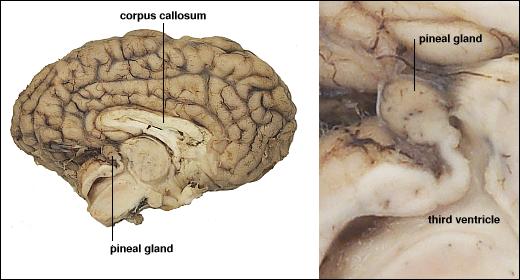 , frequently associated with the third eye. The pineal gland produces melatonin which, among other things, helps us to dream. There is a resonance here with the slight narcotic quality of the medicine of the root. Dr. Rick Strassman has theorized that at birth, at death, and at moments of extreme pleasure or pain the pineal glands also produces dimethyltryptamine (DMT), a powerful psychedellic/entheogenic compound also present in many plants (most famously in the ayahuasca vine) that seems to facilitate the spirit's journey into and out of the body. If the shape of the Skunk Cabbage flower is in fact a signature revealing the plant's affinity for the pineal gland this suggests that at a magical level, and perhaps as a flower essence, Skunk Cabbage may help to ease the transition of shamanic practitioners as they move back and forth between worlds.
The contractile roots pull skunk cabbage deeper and deeper into my consciousness -- their heat burning new pathways for mind and spirit to explore.
Subscribe to:
Posts (Atom)