Sunday, March 22, 2009

Skunk Cabbage Dreams -- a work in progress

(U.S. Forest Service photo)

It began last April with a dream. In my waking life, my lungs had been congested and my neck and shoulder were sore. Before bed, I sat at my altar and burned sage and asked for a plant ally to reveal itself to me while I slept.

In the dream, Jason sat across from me in the grass on my parent's front lawn, and as we talked he told me he was having trouble breathing too. He remembered a great aunt, a Narraganset woman, who had used Skunk Cabbage as medicine.

We began drumming and singing and walked into the swamp behind the house. We came on a giant, glowing skunk cabbage plant who told us to dig up his roots and make a tincture to help our lungs and to take his leaves and make a poultice of his leaves to relieve muscle pain.

A friend confirmed that Skunk Cabbage was a medicine that could be used in those ways, but told me that by April the plant was too full of calcium oxylate for the roots to be used safely. So it would be almost a full year before the plant would begin teaching me directly . . . .

______________________________


Skunk Cabbage is not a plant for the faint of heart. The leaves and flowers smell like a skunk when bruised -- perfume for those who like their pheremones strong, unbearable odor to those who prefer subtle scents. The roots need to be harvested in early spring, best dug when the flowers are still green and have yet to bloom.

A trickster, Skunk Cabbage lures you out into the swamp, ankle deep in barely melted water in places where the mud has thawed just enough to suck your feet down. The roots are notoriously hard to harvest A U.S. Forest Service website says:

Skunk Cabbage is a perennial herb that has contractile roots that contract growing down into the soil. These roots pull the stems of Skunk Cabbage deeper into the wet mucky substrates found in wet forests, swamps and along streams. Eventually the entire stem is below surface level. After several years of being pulled further into the soil it is nearly impossible to dig up.

But Symplocarpus foetidus also has a way of setting roots deep in the imagination. So when winter began to subside I let it be known that I was determined to harvest Skunk Cabbage roots this year.

My mother called me in mid-March to tell me that she had seen the first Skunk Cabbage coming up in the swamp I had visited in my dream. By the time I got there, a few days later, the flowers of the plants she had found at the edge of the woods were purple and blooming. Thinking that I had come too late, I thought about going home, but I decided to offer some tobacco to the flower and offer prayers in hopes that maybe skunk cabbage would reveal his secrets next year.

The first surprise came when I realized that the plant that had seemed so masculine in my dream was speaking to my heart in a feminine voice. She told me to go deeper into the swamp. So I walked out as far as I could, following a trail of strange purple flowers.

I came to the edge of a shallow pool, and looked up and saw two deer standing directly across the water. We watched each other for 10 minutes, and when they slowly began to walk away I followed them until I stumbled on a green skunk cabbage flower sprouting up out of the water. Wading in up to my ankles, I dug very carefully around the plant, and then reached down into the mud, cradling the plant in my hands, and pulling up slowly. To my surprise, the plant yielded itself to me. I shook loose the dirt, put it in my bag, and followed a stream flowing from the pool to find three more young plants willing to give themselves for medicine.

____________________________________________________________

The Skunk Cabbage rhizome is thick and woody. The roots are tough and snakelike, pulling themselves deep into the mud. They are also powerfully thermogenic, thawing the ground around them.

Their medicine works in a similar way. The form of the roots suggests the bronchii (and the form of the round spiky green fruit suggets the alveolii -- though the fruit itself is not used medicinally). The medicine works its way deep into the lungs, bringing up mucous. The anti-spasmodic action of the plant's medicine simultaneously eases the violence of the coughing generated by the plant's expectorant properties. It works best in combination with other herbs -- elecampane suggests herself to me as a plant whose medicine complements Skunk Cabbage nicely.

As a diaphoretic, Skunk Cabbage helps to open the pores, relieving the heat of early fever -- just as heat rises outward from the plants' roots into the soil.

The shape of the flower suggests an inverted uterus hinting at the use of the roots in childbirth -- used to ease contractions. Interestingly, the Makah of the Pacific Northwest chewed on the roots of the distantly related Western Skunk Cabbage (Lysichiton americanus) to induce abortion early in a pregnancy, and the Quileute used the juice of the pounded and boiled root to ease labor. (Erna Gunther and Jeanne R. Janish. Ethnobotany of Washington. University of Washington Press, 1973,) My intuition tells me that Symplocarpus foetidus may also have abortifacient properties in early pregnancy, but that those secrets are likely to reveal themselves to an herbalist only after many years of working with the plant.

_________________________________

Skunk cabbage has strange and powerful medicine on a magical level as well.

The plant's energies alternate between being intensely masculine and intensely feminine -- and sometimes the plant seems to hold both energies at once. With fire rising from its body, roots deep in earth and water, and flowers and leaves giving off their musky scent, Skunk Cabbage combines the four elements of western magical traditions.

With its paradoxical nature and its dwelling place at a boundary between worlds, Skunk Cabbage as a natural ally for shamans and midwives.

The flower whispers strange names to me -- "The Faerie Shoe" that allows one bestowed with the plant's blessing to join in the dancing of the Sidhe without wearing through the soles of the dancer's feet. "Mystery Flower" -- dark and smooth inside, reaching down into moist, fertile darkness -- allowing us to hold a connection to the place from which life emerged while remaining present to the world into which it was born.

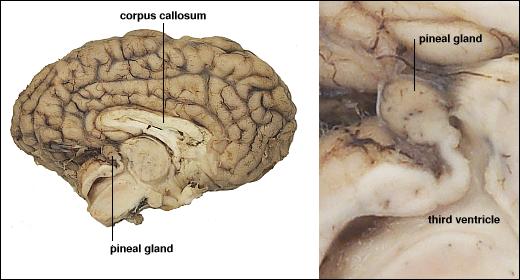
Its shape also suggests the form of the pineal gland, frequently associated with the third eye. The pineal gland produces melatonin which, among other things, helps us to dream. There is a resonance here with the slight narcotic quality of the medicine of the root. Dr. Rick Strassman has theorized that at birth, at death, and at moments of extreme pleasure or pain the pineal glands also produces dimethyltryptamine (DMT), a powerful psychedellic/entheogenic compound also present in many plants (most famously in the ayahuasca vine) that seems to facilitate the spirit's journey into and out of the body. If the shape of the Skunk Cabbage flower is in fact a signature revealing the plant's affinity for the pineal gland this suggests that at a magical level, and perhaps as a flower essence, Skunk Cabbage may help to ease the transition of shamanic practitioners as they move back and forth between worlds.

The contractile roots pull skunk cabbage deeper and deeper into my consciousness -- their heat burning new pathways for mind and spirit to explore.

Monday, January 19, 2009

Mental reservations

Commenting on the oath of office this morning, a friend wrote that "having' mental

reservations' would actually be a sign of wisdom." I don't claim wisdom, at least

not on behalf of the part of me that speaks in words, but I want to speak my own

mental reservations: I want to believe in Barack Obama. The significance and

power of a nation whose wealth was built through the enslavement of people

kidnapped from Africa electing the son of a Kenyan to be President is not lost

on me. Nor is the reality that the margin of difference between the policies

promised by the new administration and those enacted by the last is a margin that

represents life or death for millions. And who could not be moved by Rev. Joseph

Lowery speaking the benediction that evokes a god older and more loving and

more real than the God of bondage evoked by Rev. Rick Warren?


But there are truths that burn so hot that the veils that once covered them can never

be repaired. And they keep me from celebrating wholeheartedly.


Barack Obama intends to keep 50,000 -- 80,000 troops on the ground in Iraq

indefinitely. And he plans to escalate the war in Afghanistan.


Those wars and the dozen proxy wars our taxes will continue to fund are waged to

ensure the continuation of the mindless growth demanded by the system we live

under -- the growth that Edward Abbey called "the ideology of a cancer cell," the

growth that consumes forests and mountains and deserts and lives and whole

nations and whole species.I don't doubt that President Obama wants to reduce

the damage done, to render the system a little bit less brutal. And again, any

diminishment of brutality means less suffering .


But at the same time, the commitment to continuing that brutality means an

acceptanceof more "collateral damage." President Obama said "we will not

apologize for our wayof life or waver in its defense." But only when we do finally

apologize for the wayin which we have been living at the world's expense

(including apologizing to ourselves for the ways in which we have cut ourselves

off from the living Earth) can we "put aside childish things" and learn to live in a just

and sustainable way .In this country we tend to ignore the fact that systems have a

reality and mind of their own, and that they always operate to ensure their own

survival. In pledging himself to the idea of America, President Obama

surrendered a part of his own will to the systems of control that bind themselves

together under that name.


But a witch bows to no one. And I will not offer my own allegiance to that system.

I offer my love and support to a man named Barack Obama wrestling to hold

onto his humanity in a situation where great powers conspire to rob him of it.

But I have no loyalty to President Barack Obama as he undertakes the work

of attempting to guide and steer violent systems of control. My own allegiances

are to mysel(ves/f), the truth, and the living universe.Those loyalties may brand me

as an outsider -- but such has always been the way of the poet and the shaman .

Like Tomas the Rhymer I will kiss the lips of the Queen of F(a)eri(e) and be

transformed, given the gift of a tongue that will not lie that makes it impossible

to ever again be at home in a world woven from the enchantment of falsehoods

repeated so often that we no longer hear the din or imagine the possibility that the

imagination can stray outside the bounds set by that wall of noise. The tongue

that speaks the truth cuts a hole in that wall, revealing a road that leads into the

sweet, fierce ,loving wildness of the heart. I am setting out along that path.


Friday, January 2, 2009

Poetic fragments in progress

Maybe its the Scorpio rising
that makes the smell of
sex and death cling to my skin
when I slip between worlds,

reminding you of when
I let my godself rain down
where apples rotted
back into rich dark soil

watering seeds
broken open by the heat
of burning cities
and melting concrete.

Your body never quite sure
what to do with the feeling stirred
when you catch my scent on the wind,

never sure what to do with darkness --
the last time you tasted it
it all ended in blood and fire,

but something in you hungers
for the metalic pungence of that blood
and the searing blue
at the center of the flames.

And the crescent moon
you wore around your neck
was born from blackness
to which it cycles back,

but not before it shines
in silver fullness,

moving the waters in me
and calling down the rain.

Thursday, January 1, 2009

This is the year . . .

"If every rebellion begins with the idea
that conquerors on horseback
are not many-legged gods, that they too drown
if plunged in the river,
then this is the year."


-- Martin Espada, Imagine the Angels of Bread

This is the year we were born to live in.

This is the year when we begin to live as who we are, who we always have been at the core, who we were born to be.

The year we have prepared for all our lives.

After so many lifetimes of believing that the path of liberation lay in going up and out of our bodies, up and out of the world, this is the year we finally begin to come fully into our bodies, to know that their skin and bone and muscle and blood and nerve and flesh are the instruments through which our highest aspirations can be realized,

that the pleasures of our senses feed a bright and fierce fire that rises within us

and that this time instead of burning ourselves at the stake we can set that fire loose in the world,

burning away the illusions that have made people believe that there is no alternative to a life based on the brutalizing assumptions of scarcity, danger, and fear,

already we are watching the fire start to burn away the screens onto which those illusions have been projected as markets crash and an empire comes up against the limitations of its power to subdue the rest of the world through the threat or reality of starvation or bombardment.

Yes, the suffering around us is real. And yes, those still caught in fear lash out in terrifying ways as they falsely believe the fire has come to burn them instead of free them.

But at the same time billions are realizing they no longer have to surrender their wills to the disembodied spirit behind the burning curtain.

And the fire melts the pavement and the ash covers our feet and we take root again in the soil and draw up water from the Earth

and rain it back down to feed the seeds that have waited 500 years to be called back to life.

This is the year when we know for certain that those seeds will give rise to flowers and fruit again.

Rejoice!

Friday, November 7, 2008

Burning the robes

For most of my life, I have feared my own power and my own desires.

I have tried to suppress and deny and cloak them.

At a deep level, I have embraced the archetype of the priest in an attempt to contain them. I have worn that identity for so long that I began to mistake it for a second skin.

I sought an ideal of purity. I sought to lock my own desires away deep inside me, believing that I did not deserve to be loved completely and that there were parts of me that needed to be purified or burned away before I could show all of myself to anyone. At the same time I was afraid that allowing my core to be touched was a threat to my purity. Purity was my vestment.

The robe served to cloak my nakedness, to keep everyone from seeing the primal, virile, wild self that existed at my core, for fear that it might threaten or frighten or repulse people who came close to me. I did not believe that part of me could be loved or desired.

The robe also serves to shield me from the world, to keep out the air and sun and water that might feed that primal self while I tried to suffocate it out of existence.

Wearing that robe, I invited an intimacy that flowed in one direction. Come to me, show me all of who you are, and I will love you without judgement, I will support you through everything, I will take your pain as my own, I will pleasure you without expectation of return. But I will remain cloaked in my robe, hidden from you.

Sometimes, when I trusted a lover enough, I would shed that robe -- but the expectations and terms and dynamics of the relationship were already in place, and often those lovers would be confused or frightened when that all suddenly changed. And those experiences reinforced for me the idea that deep inside I was monstrous and hideous.

A very few saw through the robe from the beginning -- but convinced that if they saw deeply enough they would find something dark inside me I pushed them away.

It has taken me a long time to look deeply enough in myself to see all that I tried to conceal.

I see now that my wildness and strength are beautiful, just like the wildness and strength of the women who stir my desire.

I see now that in refusing to be seen and desired I have denied those who have tried to come close to me the very experiences I sought from them -- the pleasure of giving pleasure, the pleasure of feeling love and lust, the pleasure of touching deeply.

I see now that my wildness is at the core of my heart, that it is the wild part of me that is in love with the world and seeks to defend it, and that to tear out my wildness would be to tear out the beating heart that pumps my lifeblood.

Yes, I live in a culture that fears love, that fears strength, that fears wildness, that fears anything it cannot control.

But any fear our aggression I might trigger and inspire is far less a threat to my survival than my own attempts to sabotage myself.

I am throwing my robes on the fire.

And letting the rising flame illuminate me, revealing me in my nakedness.

Saturday, October 4, 2008

The beginning is near . . .

Driving through Maine, "All Along the Watchtower" kept playing on the radio, seeming to capture the electricity in the air . . .
"Let us not speak falsely now, the hour is getting late . . . "
The Joker and the Thief.

It took Gary Shandling, of all people, to give a cogent analysis of the state of the nation during his October 3 appearance on "Real Time With Bill Maher." In a brief moment of lucidity, Shandling said that the economic crisis represented a victory for Al Qaeda, which with the September 11 attacks, provoked the U.S. into two disastrous wars that will ultimately cost us over a trillion dollars. Shandling said that the attack on the World Trade Center had been an economic attack that set into motion the events that led to the destruction of our economy. He then resumed slurring his words and leaning in uncomfortably close to Christiane Amanpour. The true Shakespearean fool.

As Daniel Pinchbeck observed, the attack on the Twin Towers was like a tarot card come to life -- the burning tower of the tarot representing the collapse of a world built on false premises.

Global capitalism would of course have come to this point on its own eventually. Any system based on the assumption of the infinite availability of resources -- and the need for massive military force to subjugate people around the world in order to exploit their labor, mine their land, cut their forests, drill their oil and water, and take their harvests -- will eventually come up against the limits of its own power.

Already, the concentration of more and more wealth in fewer and fewer hands was creating tremendous instability. What remained of the middle class in the U.S. owed its continued existence to the easy availability of large lines of credit. Meanwhile, as a very small elite acquired unprecedented wealth -- to the point where they could afford to lose tens of billions of dollars, and so risk became a negligible factor, leading them to put huge amounts of money into the riskiest investments on the off chance of tremendously high returns. These investments expanded the credit bubble to the point of its inevitable bursting.

That was of course hastened by the siphoning of money into a substantially privatized war, rising gas prices as oil runs out, and the diminished ability of a military tied up in Iraq and Afghanistan to maintain "order" around the world.

George Kennan famously wrote:
"We have about 50 percent of the world’s wealth but only 6.3 percent of its population. In this situation, we cannot fail to be the object of envy and resentment. Our real task in the coming period is to devise a pattern of relationships which will permit us to maintain this position of disparity without positive detriment to our national security. To do so, we will have to dispense with all sentimentality and day-dreaming; and our attention will have to be concentrated everywhere on our immediate national objectives. We need not deceive ourselves that we can afford today the luxury of altruism and world-benefaction. The day is not far off when we are going to have to deal in straight power concepts.”
We have now reached the next stage -- the stage where straight power has reached its limit. The U.S. is no longer able to force other countries to submit to its will. New power blocks are emerging -- like the alliance between the new governments of Bolivia, Ecuador, and Peru -- carving out space for social, political and economic experiments.

Empires don't die easily of course. As the economy collapses, there is fear of massive unrest at home -- and an ominous sign that we may be on the verge of seeing a level of violent repression not seen in this country since the early part of the twentieth century.

The Army Times reported on September 30 that:
"The 3rd Infantry Division’s 1st Brigade Combat Team has spent 35 of the last 60 months in Iraq patrolling in full battle rattle, helping restore essential services and escorting supply convoys.

"Now they’re training for the same mission — with a twist — at home.

"Beginning Oct. 1 for 12 months, the 1st BCT will be under the day-to-day control of U.S. Army North, the Army service component of Northern Command, as an on-call federal response force for natural or manmade emergencies and disasters"
This marks the first time in recent history that a full combat brigade has been assigned a long-term mission on U.S. soil. (Troops were sent to Pine Ridge Reservation in 1973 in response to the American Indian Movement's occupation of the site of the Wounded Knee massacre to protest the brutality and corruption of the tribal government on the reservation.)

The Brigade is subject to activation under an executive order that essentially authorizes the institution of martial law in the event of an emergency -- including an economic emergency. As Matthew Rothschild writes:

"'In Bush's National Security Presidential Directive 51, he lays out his authority in the event of a catastrophic emergency. In such an emergency, 'the President shall lead the activities of the Federal Government for ensuring constitutional government' and will coordinate with state, local, and tribal governments, along with private sector owners of infrastructure.

"NSPD 51 defines a catastrophic emergency as 'any incident, regardless of location, that results in extraordinary levels of mass casualties, damage, or disruption severely affecting the U.S. population, infrastructure, environment, economy, or government function.'

"Notice the use of the word 'or' above. In our current circumstances, it might be more relevant to read the definition this way: 'any incident . . . that results in extraordinary levels of . . . disruption severely affecting the U.S. . . . economy.'

"President Bush could declare a catastrophic emergency today. And he'd have the 3rd Infantry, First Brigade Combat Team, well trained from its years patrolling Iraq, at his disposal here at home."

All of this marks the final phase of what Subcomandante Insurgente Marcos has described as the Fourth World War -- the war in which global capitalism, no longer restrained by opposition from the Soviet bloc, attempts to gain complete domination. Of course, in a universe governed by entropy, any attempt to obtain total domination courts disaster. As Marcos wrote in 1997:

"Unlike the third world war, in which the conflict between capitalism and socialism took place over a variety of terrains and with varying degrees of intensity, the fourth world war is being conducted between major financial centres in theatres of war that are global in scale and with a level of intensity that is fierce and constant.

"The ineptly-named cold war actually reached very high temperatures: from underground workings of international espionage to the interstellar space of Ronald Reagan’s famous 'Star Wars'; from the sands of the Bay of Pigs in Cuba to the Mekong Delta in Vietnam; from the frenzy of the nuclear arms race to the vicious coups d’état in Latin America; from the menacing manoeuvres of NATO armies to the machinations of the CIA agents in Bolivia, where Che Guevara was murdered. The combination of all this led to the socialist camp being undermined as a world system, and to its dissolution as a social alternative.

"The third world war showed the benefits of 'total war' for its victor, which was capitalism. In the post-cold war period we see the emergence of a new planetary scenario in which the principal conflictual elements are the growing importance of no-man’s-lands (arising out of the collapse of the Eastern bloc countries), the expansion of a number of major powers (the United States, the European Union and Japan), a world economic crisis and a new technical revolution based on information technology.

"Thanks to computers and the technological revolution, the financial markets, operating from their offices and answerable to nobody but themselves, have been imposing their laws and world-view on the planet as a whole. Globalisation is merely the totalitarian extension of the logic of the finance markets to all aspects of life. Where they were once in command of their economies, the nation states (and their governments) are commanded - or rather telecommanded - by the same basic logic of financial power, commercial free trade. And in addition, this logic has profited from a new permeability created by the development of telecommunications to appropriate all aspects of social activity. At last, a world war which is totally total!

"One of its first victims has been the national market. Rather like a bullet fired inside a concrete room, the war unleashed by neoliberalism ricochets and ends by wounding the person who fired it. One of the fundamental bases of the power of the modern capitalist state, the national market, is wiped out by the heavy artillery of the global finance economy. The new international capitalism renders national capitalism obsolete and effectively starves their public powers into extinction. The blow has been so brutal that sovereign states have lost the strength to defend their citizens’ interests.

"The fine showcase inherited from the ending of the cold war - the new world order - has shattered into fragments as a result of the neoliberal explosion. It takes no more than a few minutes for companies and states to be sunk - but they are sunk not by winds of proletarian revolution, but by the violence of the hurricanes of world finance.

"The son (neoliberalism) is devouring the father (national capital) and, in the process, is destroying the lies of capitalist ideology: in the new world order there is neither democracy nor freedom, neither equality nor fraternity. The planetary stage is transformed into a new battlefield, in which chaos reigns."
Chaos is a dynamic force, allowing the emergence of the space where the "intercourse between creation and destruction" allow the emergence of new worlds.

The New Yorker ran a cartoon last year in which a fish with legs emerged onto the beach holding a sign that said "The Beginning is Near."

For most of us, no matter how radical our politics, imagining life outside capitalism is no smaller a conceptual leap than it would be for a fish to imagine life outside water. For five centuries, capitalism, and its underlying ideology which defines the world as a machine has defined our culture's shared reality. Even socialism accepted the basic assumptions of capitalism -- the assumption that the ideal path for humanity to take was the maximization of production, disputing only the questions of who should control the means of production and how the fruits of production should be distributed. We are now entering an era where it is abundantly clear that living a life based on those assumptions is a recipe for disaster in a universe where matter and energy cannot be created or destroyed, and where the only economies that are truly sustainable are those which honor and embrace our places in cycles of life and death, give and take, where the survival of the individual is deeply dependent on the survival of the community and the planet.

Elements of the new world are already taking shape: growing resurgences of herbalism, homebirth midwifery, homesteading, permaculture, gleaning, and localized barter networks in the U.S., the creation of liberated autonomous zones by the Zapatistas in Chiapas, and even aspects of the national projects in Bolivia and Ecuador where socialism, indigenous traditions, and participatory democracy are interwoven in the fabric of a different kind of society. Ecuador's new Constitution outlines concepts essential to the formation of sustainable and just institutions in a post-fourth world war world. Helga Serrano and Eduaro Tamayo outline some of the key provisions of this Constitution:

"The constitution combines a series of progressive traits that overcome some of Ecuador's current inequalities, discrimination, and injustices, such as the following: the balanced living concept (sumak kawsay), which implies living in harmony with oneself, society, and nature; nature's right to assure 'the maintenance and regeneration of its vital cycles, structure, functions, and evolutionary processes'; national diversity and collective rights; the right to water and the prohibition of its privatization; food sovereignty and the permanent right to secure food sources; the right to communication, and access to public, private, and community media.

"The new constitution also has a chapter on the prioritization of national production in its economy. In regards to development, it recognizes the 'group of economic, political, social, cultural, and environmental systems that guarantees the realization of the balanced life, sumak kawsay.' This means that economic growth is not the only priority as a means to reach development; instead, it is considered an integrated vision. It proposes, among other things, 'to build a fair, democratic, productive, solidarity-based, and sustainable economic system founded on the equitable distribution of development benefits, means of production, and the generation of dignified and stable work.' (Article 276)."
All of this, of course, describes only a process of transition, a framework that creates the space for something new to emerge -- animated by something very old, the pre-capitalist understanding of the world as alive that was shared by Earth-based cultures on both sides of the Atlantic. An idea that was suppressed but never completely destroyed by the Enclosure movement and the witch burnings in Europe, the genocidal campaign against the indigenous peoples of the Americas, and the kidnapping and enslavement of countless millions of Africans.

As the culture that perpetrated that violence falls and its myth of domination and control begins to disintegrate, older worlds that never completely died are beginning to regenerate and re-emerge. Cultures driven to the edge of oblivion won't re-emerge in their original forms -- they will evolve in new forms that arise from the conditions of their re-emergence. In many places those forms will be hybrids that reflect the history of people ripped away from different places and different traditions interacting in new places. Exactly what will emerge is beyond our imaginations.

But it is abundantly clear that the beginning is near.

Wednesday, September 3, 2008

Fertile Darkness -- Fragment of a cosmology

In The Book of Herbal Wisdom, Matthew Wood writes:
"The lower world is spoken of in hushed tones. It is called the Underworld, a dimension apart from ordinary consciousness. Here, if we entertain the old tales, the root essence of each creature is found in its unblemished origin and potency.
The night that I met M., when I heard her speak of learning to listen to the plants, I imagined her with her ear to the ground, listening for something stirring, and I saw the dark world beneath the snow and frost where seeds lay waiting for water to melt into the soil and awaken them. I feel in love with that sense of openness and belief and listening.

In that strange moment of opening and discovery we had access perhaps also to the root essence of our own beings and the connection between them, in its own "unblemished origin and potency."

Time would change that and leave the origin unrecognizable.

But I hunger again for that same kind of opening, for the moments in which the fertile darkness of the underworld seeps into our own reality, and something takes root, the rhizome winding through the crack between worlds, pulling up water from outside of time.